Find your Inner Strength

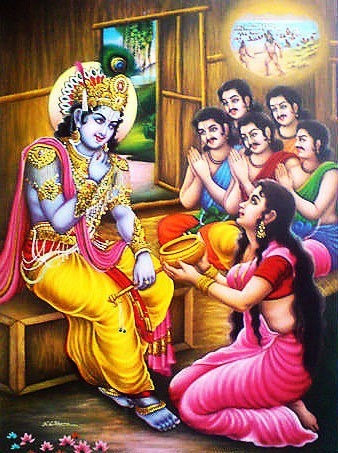
A week back, while I was working on a leadership module for a level II executive batch of middle management & senior executives, I thought of another story from Indian mythology to back my content. Like I always maintain, stories enable a total recall. Stories not only evoke our brain cells but they also summon up the lessons. To explain, let me share an incident from Ramayana– Ravan abducted Mata Sita, Lord Ram’s wife, and took her to his capital, Lanka. Lord Ram searched for his wife all over and reached Rishyamukha where he met Hanuman and Sugrive and their Vanar Sena (Army). Lord Ram helped Sugrive regain his honor and reunite with his wife, who was abducted by his brother Bali. Hanuman and his Vanar Sena pledged to help Lord Ram and find Mata Sita. Lord Ram gave his ring which was to be shown to Mata Sita to establish their identity that they were sent by Lord Ram. The Vanars lead by Angad spread all across and started searching for Mata Sita. They reached the southern end of the land and ahead was a vast ocean. Crossing the ocean was a great challenge and they were sure that they won’t return without finding Mata Sita and decided that they will fast unto death. There they met, Sampati , a vulture and brother of Jatayu, who tells them that Mata Sita is in cruel shackles of Ravan and is sitting under a tree in his palace in Lanka. Sampati asks them to use their strength and skills to cross the ocean and reach Lanka. Like any new assignment, conflict or situation in our jobs/everyday life, they did their SWOT analysis. While they discussed their strengths and calculated how far they can go in the ocean- they realized that it won’t come close to crossing the ocean. Listening to all this, Hanuman got discouraged and separates himself from the group. He was getting into a stressful pressure cooker situation – he had the pressure to perform and accomplish the task at hand. Noticing him standing alone and discouraged, Jambavanth who was older than all the Vanars, goes to him and tells him about his strengths and tells him that he’s the only one who can cross the ocean. And all Vanars starts praising Hanuman. This is how a good boss, a leader influences the team and like most of the times – few could realize their inner strength and true potential. Jambavanth kept on telling – You are as powerful as the wind You are intelligent, illustrious & an inventor. There is nothing in this world that’s too difficult for you. You possess the ability to rule against every obstacle. As per Ramayana, Hanuman was cursed by a sage during childhood that he will forget his strengths and would be unaware of the extent of his capability & potential until he’s reminded by someone. Like in the modern age, we are surrounded by so many distractions, attractions, aspirations, opportunities, ill-focus and peer pressure that we start worrying about the problem so much that we eventually forget about our own inner strengths and we end up thinking about the problem so much that we do not even think about the solution. Remember, the capability to achieve things from our own inner strength lies inside, we only need to realize it and attempt. As Hanuman became aware of his strengths, his stature became giant and he collected his inner strength, tall enough to cross the ocean he jumped the ocean to in search of Mata Sita. [You can watch the relevant video from Ramayana here] Knowing ones strengths is most important for anyone who wants to be successful in his life. A true leader knows the art of exploring the strengths of his team member and motivates them to work on their strength to reach a common objective. Circumstances, Situations, Peer pressure, People Conflict are all external factors but one’s own strength lies within. Your success lies inside you. Realize and succeed.

Trap of 99- Striking the Work Life Balance

Once there was a Seth (Rich Man). One night the Seth and Sethani (his wife) were standing on the terrace of their house and they saw their neighbor, a Brahmin, playing with his kids and seemed very happy with his kids. While Brahmin was busy playing with his kids, Sethani told the Seth that their neighbors are poor still they are happier than them, they spend more time together. Upon listening to his wife he told his wife that their neighbors are happier because they are not under trap of 99. His wife asked what he means by the trap of 99. He asked his wife to wait for some time and she will come to know. Calling it a day then, they went to sleep. Next day when the Brahmin‘s wife woke up and opened the door of their house, she saw a small bag lying in front of the door. She looked around but couldn’t locate anyone. So she picked up the bag and brought it inside and called her husband. Upon opening the bag they saw gold coins in it. Curiously they counted the coins and found it has 99 coins. Brahmin was very happy to see the money and thanked God. But his wife said, “Had there been one more coin in it, they could have had 100 coins”. Upon seeing disappointment on his wife’s face, Brahmin told her not to worry as he’ll work hard and will earn one more gold coin and make it 100. And his wife told him that they spoiled their precious time and should have tried and made some money. And from that day onward they started putting more hard work in their work to earn gold coin and they forgot playing with their kids and stopped laughing. Now Sethani understood the reason behind the change in Brahmin’s family as they were trapped by 99. The ‘trap of 99’ is nothing but a phenomena of craving for more, which defines the human nature of not being satisfied and happy with what they have but to invite stress and tensions in the chase for what all they do not have. This is an age old story which tells us not to be trapped by 99 and teaches to enjoy our lives with whatever we have and to strike a work life balance. But what we see around is most of us are running in an endless rat race. People are so busy and held up in fulfilling their aspirations that they forget to give enough time to their families which results into more stressed lives, low productivity and a feeling of incomplete life. Take a moment and think about the increasing trend in divorce cases, children going against their parents, alcohol problem, drug abuse, suicides and what not. Society is victimized by this imbalance because families are becoming nuclear, parents cannot cope up with their work, kids are over burdened to perform and everybody needs space. What a vicious circle it is – of growth and development! Cost of living is so high these days that people hardly get enough money so they try to work harder to earn more and compromise on their personal life and aspirations. After all, man is a social animal. However, the trap doesn’t deny the hard-working or chase for achievement. It just suggests that a balance is required. One should not ignore his work; neither shall one stop dreaming/aspiring. But all this should not be done at the cost of his/her family. So what do we do in such a situation? Strike a Work Life BALANCE. Balancing work with life is a matter of grave concern for the companies as well as their employees. This kind of imbalance is resulting into low productivity and high attrition. It is unfortunate to see that most of the companies remain ignorant on the long term cost involved to create a work-life balanced environment. They fail to realize that this thus leads to loss of talent, performance and ultimately revenues. Here are some simple ways on how to strike balance between family and work life: 1. Prioritize: Do not plan too many things together and don’t treat everything as top priority. Finish urgent tasks first and then take important ones. The important tasks should be finished before they become urgent. Check what can wait. 2. Have a Support System-Delegate: One cannot do everything by himself. Try and have a support system among family, colleagues and friends, who are willing to help if something unexpected happens. Learn to delegate and help others, if they are in need. This will not only help to finish the task within time limits but will also create bonding within the team. But delegate only if you are not disturbing the other person’s schedule. 3. SAY ‘YES’ to ‘NO’: You must know – what you can take up in your stride and what not. If you have a list to abide by, you don’t have to agree to everything and to everyone. Say No to something which is beyond your physical & mental stamina because neither you’ll be able to do justice with the task and nor with yourself. Through this you would also avoid unnecessary negativity and pressure. 4. Set SMART Goals: Set Specific >> Measurable >> Action Oriented>> Realistic >>Time Bound Goals. Break your goals in smaller goals. Develop plan to reach those goals on daily, weekly, monthly and yearly basis and keep a tab on your progress. If things don’t change and the strategy which you have formulated is not working, alter your strategy and make it in sync with the resources you have. Alteration in your strategy should not change your goals. It’s just like taking some new route to reach your destination. Don’t forget to share your goals with your family and make them partner to your goals. 5. Create Work Life Happiness: Don’t work to earn only money. Work to create happiness, towards self satisfaction and the money… Continue reading Trap of 99- Striking the Work Life Balance

Lessons from Mahabharata

Mahabharata is one of our Puranas and is considered to be an ocean of wisdom. Every story of the epic teaches us so many lessons. In this post I’ll share a story from the epic and Lessons from Mahabharata. Here’s the Story: After losing their kingdom to Kauravas in gambling Pandavas were forced to go and live in the forest. Lot of their friends including various Maharishis’ used to visit them. They found it very difficult to give them food. So Draupadi, the wife of Pandavas, prayed the Surya Dev (The Sun God). He gave her one Akshaya Patra which would give any amount of food in a day, till Draupadi takes her food. With the Akshaya Patra the Pandavas were able to give food to all their guests. The Kauravas wanted to trouble them further. They requested Maharishi Durvasa to visit Pandavas late in the night. Durvasa was very short tempered and used to curse people whenever he got annoyed. Durvasa reached Pandava’s’ camp in the forest after Draupadi had taken her food. Pandavas welcomed Maharishi Durvasa and asked him if he will have dinner and Maharishi Durvasa told them that he is yet to have dinner. Knowing there was no food at home, Pandavas requested Maharishi Durvasa to go and take bath in the river so that they can keep food ready. Pandavas were very confused as they did not know what to do. If they tell him that they have already eaten food and there is nothing they can offer in Dinner, he could curse them. Draupadi prayed Lord Krishna for help. Lord Krishna came immediately. He said to Draupadi, “Sister, I am hungry, give me food.” Draupadi was confused and started crying. Lord Krishna asked her to bring Akshaya Patra. In the corner of the Akshaya Patra, one rice grain was sticking. Krishna took the rice, ate it and drank some water. He told Draupadi, “Thanks a lot, my stomach is now full”. He then went away. At that time Maharishi Durvasa was taking his bath. Suddenly he felt that his stomach was full. He was worried that he had made Pandavas cook food for him. He came and excused himself. Like this Lord Krishna solved the problem of Pandavas. From that day onwards Hindu women don’t keep their chapati boxes empty as symbol of their faith in Lord Krishna, believing if they ever get caught in such a situation then Lord Krishna will come for their rescue. You must be wondering why am I sharing this story of Pandavas and Maharishi Durvasa with you, as neither of us, under any circumstances, is going to live in the forest and nor will have guests, like Maharishi Durvasa, with the power to curse. There is certainly no formula to a Happy Life but there is certainly a will to stay happy and some lessons that would make life much easier. The above story brought to me so many inferences, read out if you can relate and learn: Kauravas were Pandavas’ enemies still Pandavas were ignorant about their strategy. Never let your competitors to be out of your sight and don’t give them a chance to trouble/hurt you when you are unarmed. We may have all the luxuries like Akshaya Patra but If we don’t save for our future, we’ll definitely end up facing difficulties/curses in our lives. Save something for future on daily basis. Maharishi Durvasa was very shot tempered but Pandavas engaged him and sent him to take bath.< It’s very easy to manage difficult people by engaging them. Though Pandavas didn’t had any food for Maharishi Durvasa, still they didn’t tell this to him. Listening is the most difficult task on the earth; learn to be calm in difficulty. Pandavas sent Maharishi Durvasa to take bath so that they can arrange for the food. Timing of your action is most important. Buy time in case of emergency and never take decisions in haste. We need to have such good friends, like Lord Krishna, who can save us from difficulties. Invest in relationships. Though Pandavas were forced to live in forest still they kept on meeting/inviting their friends and various sages. Don’t let your relationships perish with time. Keep in touch with old buddies and friends. As Draupadi used to be last one to eat food ensure you don’t use/consume all resources at one go. Trust your friends like Draupadi trusted Lord Krishna. Don’t hide things from people you trust. If you are right & truthful God himself will come for help. Never lose hope. Choose Happiness. It’s a way of life.

Creativity and Innovation – The Thirsty Crow way

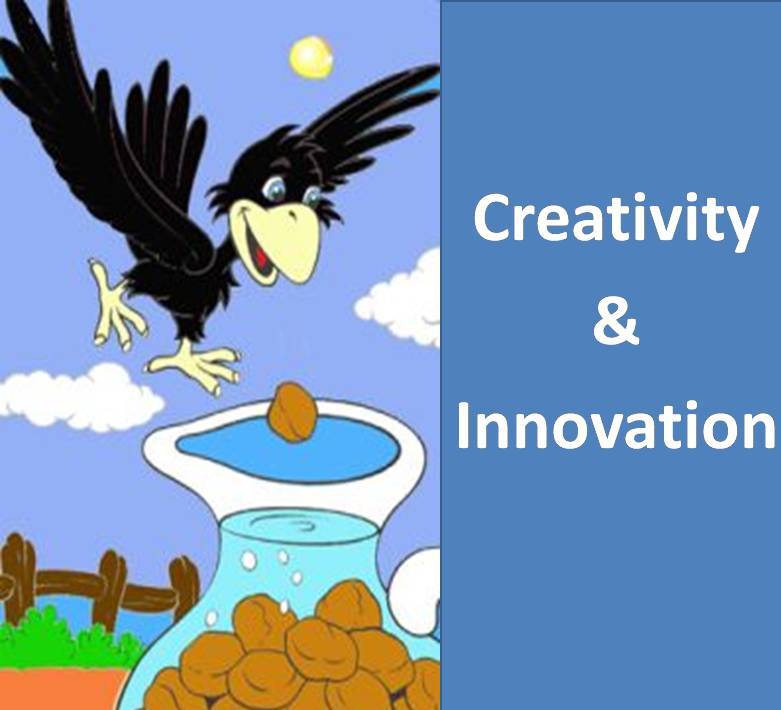
Let me take you back to the age old story of ‘Thirsty Crow’. Once there was a crow. He was very thirsty. He went here and there in search of water. At last he saw a water pot. He looked inside the pot. There was very little water inside the pot. The crow saw some stones nearby. He thought of a plan. He picked some stones and started putting stones inside the pot one by one. The water level came up. He drank the water and flew away happily. This story was amongst the first few I was told during my childhood. The then moral of the story was ‘‘Where there is will, there is a way’’ but life is all about exploring and evolving constantly. Going with that we human beings are the certainly the most accommodating and we instantly look for solutions. I have been observing people, reasons vary – the pressure of circumstances, peer pressure, family expectations and what not. Everybody loves short-cuts and ‘Jugaad’ for that reason is picking up fast. It is no more a way of life…it is smart strategy. The solution and results matter at last – for my driver, the maid, the friends, the colleagues and almost everyone around. If someone bangs the idea of ethical ways – people just disregard the philosophy and feel that you are not aware of how the world works. How to get the job done is no more a concern, to get the job done is what matters. To share an experience – few days back I had gone to meet my Uncle at Aligarh and on the way back my car broke down. I was around 25 kms from the city. I called my cousin to help and in half an hour’s time he came to the rescue with a mechanic. He checked my car and told me that it needs to be taken to workshop. I told him I can’t spare that much of time as it was already 3 pm and I had an urgent meeting the very next day. He said in Hindi, “To iska koi jugaad ker deta hoon” (“He will do something”- Read it as temporary arrangement) so that I can reach Gurgaon. He connected some wires to the battery and asked me to test if the car is fine. I checked and my car was working perfectly. I thanked him and started my journey to Gurgaon and in around 4 hours I was there at my home in Gurgaon. Next day I went to a nearby service station and got my car repaired. Defining Jugaad ‘Jugaad’ is a word which is used very frequently in day to day life. As per Wikipedia, Jugaad means an innovative fix or a simple work-around, sometimes pejoratively used for solutions that bend rules, or a resource that can be used as such, or a person who can solve a vexatious issue. Both concepts express a need to do what needs to be done, without regard to what is conventionally supposed to be possible. Indovation, Chinovation, Hack, Kludge are some of the words which are used as synonyms to Jugaad. All the concepts express need to do what needs to be done without taking the same old beaten path. And The Thirsty Crow was the first to travel ‘the Jugaad way’ and now I know the current moral of the story is to use possible means, creativity and innovation whichever can help human kind to live a solution driven life.

Indian Education System – A Real Concern!

A lot is been said & discussed on the Indian education system after the very popular 3 idiots. But my post certainly is not around just the concerns raised about the pressure created over the students by the best of internationally renowned institutions. Recently, 44 deemed universities have been de-recognized and the newspapers say, almost 2,00,000 students will bear the brunch.Most of these are marked as money making with lacunae ranging from infrastructure, facilitators; their expertise in the programs offered etc, the system is collapsing with so many private institutions making their way to become the Alma Maters for lakhs of students. The students are being disguised on various levels, graduation, post-graduation, M.Phil, Doctorate etc. Now what worries me is – Is that too a lacunae in the system that students get to enroll themselves in such institutes without prior check on the backgrounds? I mean not those who are enrolling for the post graduate programs.What made me write about this issue is a simple help I was asked for and decided to offer to an Aspiring Manager. Yeah, it’s again about the management schools- Oh! There are a number of them and I have been writing about this earlier also. Read that here. Anyways, the reason what intrigued me was the kind of study material provided by the B-schools. The pedagogy they follow and more then that the way they expect to create future managers. I myself have studied at a B-school and that’s the reason why I get worried when I discover the prevailing loopholes in management education. Some of the major problems:- The methodology of imparting knowledge. – Complete Ignorance to experiential learning. – Pedagogy – Do they know the purpose of them being the facilitators? – Course Material – Management seems to be a synopsis of study material of +1 to graduation. – Case Methodology – Are we even in the process of incorporating the same? Do we know the significance? – Examination Pattern – This too is a great cause of failure of the B-school system. Students are not even aware of what is the application of knowledge. Most of the B-schools are still offering the knowledge & not the skill set which enables application of that knowledge. Nevertheless, these are just the instant observations i could made. I am sure there is still a lot to say & more to do about this.

Visualization for Presenters – A Healthy Articulation Tip

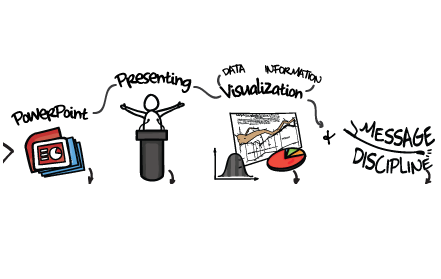
Articulation is technique and talent. Some possess it by birth and others develop it through practice. PowerPoint is an important tool and it is the first impression and of course the last one too. Visualization for Presenters. Yes, that’s the technique to keeping your audience from getting bored & sleepy. Many a times, the classroom listeners agree to be sleepy with eyes wide open during the sessions. Remember, shabby decoration is a failure. Images should be logical. They shall not go out of context. One must try to keep the logic intact. Humor in between the slides mainly between topics is a good idea. It provokes interaction. Trick is to keep the relevance in topic and humor. You can replace text with images. Make sure they don’t go just out of context. Like they say a picture is worth a 1000 words. Studies have proven, human brain grasps more through images then through words. Visualize statistics (facts & figures) through visualizing modes like Tables, Pie-charts, labels, numbers etc. Keep adding more of inputs you use & appreciate in a presenter!

Teaching/Trainings – A thin line, a lot impact!

Teaching is a classroom affair. Training doesn’t necessarily be conducted in the classroom. Teaching enhances knowledge. Training is about knowledge & skills. Teaching is imparting. Training is sharing & exploring. Teaching is facilitated with books. Training is an art of explanation. Teacher prepares a chapter. Trainer prepares content & himself. Teaching requires subject preparation. Training requires skill refinement. Teacher emphasize on listening. Trainer emphasizes learning. Teacher explains theory. Trainers deliver concepts.

My First Step to Corporate Trainings

My first post on trainings was this one….on my marketing blog so I thought this shall be at the first place on my Trainings blog as well. More updates will follow soon…. Trainings – A First Hand Experience Last week I got an opportunity through Yajnaa, to design and deliver a workshop at Ambuja Cements. The day was World No Tobacco Day i.e. the 31st of May. The topic was Alcohol & Tobacco – How to Quit? I had a week to plan and prepare. Homework was backed through a research project which I had done some 2 years back. The basic knowledge of the subject was there with me as the research was done thoroughly and in detail. The qualitative depth interviews done with the youth and with those rehabilitating at Divyasri, a Bangalore based Rehabilitation Centre made wonderful case studies and I added four of them.The base was there but I was required to work hard on it. For the reason it was the first opportunity and I wanted to give my best shot. Also the unrest for being resting from a month was another reason. The expectations and faith that was showed, the pressure to live up to them was another. But yes, also there was the refreshing excitement to try and successfully finish the exciting project at hand. The Preparation –Reading: I believe that whatever task we take in hand we should be able to argue (politely) on that. The most important pre-requisite is to have detailed knowledge on the same. The ideas and understanding both should be there in ample, to argue and advocate. Presentation: The way you present the data, facts and figures is important but the key to presentation is how interesting you make it. I made extra effort towards breaking the monotony in the presentation. For that after every 3 to 4 heavy slides there was an activity, a intriguing slide or an AV. Being a first timer, I was thinking from my own perspective, the experience of being a listener in heavy HR sessions or a workshop at workplace.My continuous effort was not to let my audience look at their watches after every while.Writing: This is the back up exercise. The last minute nervousness should not result in skipping the points. That was a major concern. So I made my copy of handout a notes copy for myself. That served as a quick revision for me during the breaks. And I was saved from missing some very critical points. Discussion: Last in my preparation in discussions. I did discuss the entire concept and action plan with 2 people that always help. These discussions not only provide the second opinion on the entire effort but also trigger some more ideas which almost always result in bettering the entire preparation. The Response-Whatever hard work we put in any project the best result we attain is in the form of response. I started getting the response from the first slide because the presentation demnded the audience to participate. I made them interact more and more. At time I was only the trigger to make them think and respond to the slides. By the lunch time, the workshop was in full swing, my audience which comprised of learned and few unprivileged was responding to me. That was my result, happy responding faces, wanting to discuss things, share experiences and stories.Their response to the activities was another reward.

The Little Angel

Do you believe in angels? Have you ever seen an angel? I never believed till the time I didn’t meet a Little Angel. I was very young when I started learning to ride bicycle. I was quick to learn and just after a couple of practice sessions I was able to ride on my own. I was quite confident that now I can ride fast. As they say confidence is good but overconfidence always sinks the ship and I learnt this hard way while riding. I was driving fast when I saw a scooter taking a sharp turn and moving in my direction. I panicked and I applied the brakes. I lost control of the bicycle and I fell down on the road. A couple of bystanders rushed to help me. They picked me from the road and I was bleeding from my nose. They took me to a nearby hospital for the first aid. Doctor checked my injuries and asked if any of my family members was around. I gave him my father contact number and he was there at the hospital in next few minutes. Doctor told my father that there are no internal injuries but to stop bleeding I needed a couple of stitches, to which my father agreed. Doctor asked the nurse to give me an injection and then he will stitch the wounds. I was very scared of injections and I started crying due to tyrpanophobia. The moment nurse started filling the injection my screams got louder and louder. I was crying so loudly that my screams were audible to everyone present in the hospital. My father and everyone around tried their level best to make me agree for the injection but I was determined not to take injection. While they were trying to give me an injection forcefully, a 7-8 years old kid came to my bed and touched my head with his small hands. I could not stop myself looking at him as he said, “ਵੀਰੇ ਤੁਸੀਂ ਟੀਕੇ ਤੋਂ ਡਰਦੇ ਕਿਉਂ ਹੋ? ਮੈਂ ਤਾਂ ਨਹੀਂ ਡਰਦਾ l ਟੀਕੇ ਦਾ ਦਰਦ ਚਾਰ ਸਾਹਿਬਜ਼ਾਦਿਆਂ ਦੇ ਸ਼ਰੀਰਾਂ ਤੇ ਚੱਲੀਆਂ ਕਟਾਰਾਂ ਤੋਂ ਕਿਤੇ ਘੱਟ ਹੁੰਦਾ ਹੈ.”- (“Dear Brother, why are you scared of an injection? I not scared of anything. Pain of this injection is not even a fraction of the pain four sons of Guru Gobind Singh Ji would have suffered when they were hit by swords fighting evil”). His words just mesmerized me I stopped crying and got the injection. While doctor was stitching my wounds I was thinking about the sacrifices of four sons of Guru Gobind Singh Ji. Their sacrifice was for others and they had no personal interests while injection and stitches were for my early recovery. Surprisingly I felt no pain at all during the small surgery. I promised myself that I’ll never be scared again from such petty things like injections or stitches. I recovered in a couple of weeks and soon afterwards I started riding my bicycle again. I don’t know who he was? Where did he come from? Why did he inspire me to take the injection? I never saw him again and to this day I believe him to be “the little angel’, who was sent by God. He is amongst my biggest sources of inspiration. Whenever I see people scared from troubles of their lives; I share the story of ‘The Little Angel’ and tell them the importance of pains which leads us to better life.