Leardership Lessons from Samudra Manthan

According to Hindu mythology, Indra, the king of Svarga, once traveled through the heavens on his celestial elephant Airavata. During his journey, he encountered Rishi Durvasa, a sage known for his spiritual power and fierce temper. Durvasa offered Indra a sacred garland blessed by Lakshmi, the goddess of wealth and prosperity. Indra accepted the garland, but instead of wearing it respectfully, he casually placed it on Airavata’s head. The elephant threw the garland to the ground and crushed it under its feet. Durvasa viewed this act as a serious insult to the divine blessing carried by the garland. Furious at the disrespect, he cursed Indra and the devtas. The curse stripped them of their strength, prosperity, influence, and divine energy. As a result of the curse, the devtas began losing battles against the asuras. Under the leadership of Bali, the asuras captured control over the three worlds. Weak and defeated, the devtas approached Vishnu for guidance. Vishnu advised them to churn the cosmic ocean and obtain Amrit, the nectar of immortality. However, the task required enormous power and coordination. Vishnu instructed the devtas to form a temporary alliance with the asuras. He suggested that both sides work together to churn the Ocean and told them to workout sharing of divine treasures diplomatically. And he would ensure victory for the devtas. The devtas then approached King Bali and informed him about the hidden treasures and Amrit, the nectar of immortality concealed within the vast ocean. Excited by the possibility of immortality and unimaginable wealth, Bali and the asuras agreed to participate in churning of the ocean. The great event became known as Samudra Manthan. To begin churning, the participants uprooted Mount Mandarachal and used it as the churning rod. The serpent, Vasuki, agreed to serve as the rope after receiving a promise of Amrit. Carrying the enormous mountain proved extremely difficult, and many devtas and asuras collapsed from exhaustion. Vishnu revived the fallen warriors, carried the mountain on Garuda, and placed it in the middle of the ocean. Vasuki wrapped himself around the mountain. Vishnu advised the devtas to hold the serpent’s head while the asuras held the tail. The asuras rejected the arrangement because they considered the tail inferior and inauspicious. As a result, the devtas accepted the tail position instead. When the churning started, the mountain began sinking because of its immense weight. Vishnu immediately assumed his Kurma avatar and took the form of a gigantic turtle. He supported the mountain on his shell and stabilized the entire process. As the churning continued, a deadly poison called ‘halahal’ emerged from the ocean. The poison spread toxic fumes that threatened all creation. To protect the universe, Shiva consumed the poison and held it in his throat. The poison turned his throat blue, which earned him the title Neelakanth, meaning “the blue-throated one.” After the poison emerged, many divine treasures and celestial beings rose from the ocean. Hindu scriptures collectively describe these treasures as the Ratnas. Among the most important treasures appeared Lakshmi, who chose Vishnu as her eternal consort. Celestial dancers such as Rambha and Menaka also emerged and later joined the Gandharvas. The devtas accepted Varuni, the goddess associated with wine and pleasure. Several divine animals also appeared during the churning. These included Kamadhenu, the wish-fulfilling cow given to sages for sacred rituals; Airavata, the celestial elephant claimed by Indra; and Uchhaishravas, the magnificent seven-headed horse received by Bali. The ocean also revealed precious objects such as the Kaustubha jewel worn by Vishnu and the Kalpavriksha, the wish-fulfilling celestial tree later taken to Indraloka. Other treasures included Chandra and Dhanvantari, the divine physician who emerged carrying the pot of Amrit. The moment Dhanvantari appeared with Amrit, the nectar of immortality, conflict erupted between the devtas and the asuras. The asuras seized the pot and refused to share Amrit with the devtas. To recover it, Vishnu transformed into Mohini, an enchanting female form of unmatched beauty. Mesmerized by her charm, the asuras trusted her and allowed her to distribute Amrit fairly. Mohini seated the devtas and asuras separately. She then secretly served the Amrit only to the devtas. An intelligent asura named Swarbhanu recognized the deception. He disguised himself as a devta and quietly sat between Surya and Chandra. Before anyone noticed him, he drank a portion of Amrit. Surya and Chandra quickly recognized the disguise and alerted Mohini (Vishnu). Vishnu instantly used the Sudarshana Chakra to sever Swarbhanu’s head. However, Amrit had already touched him, so he did not die. His head became known as Rahu, while his body became Ketu. Hindu mythology later connected this story with the origin of eclipses. After the devtas consumed Amrit, Vishnu revealed his true form and returned to Vaikuntha on Garuda. Furious after realizing the deception, the asuras launched a massive war against the devtas. Empowered by Amrit, the devtas eventually defeated the asuras, reclaimed Svarga, and pushed their rivals into Patalaloka. Who Was Swarbhanu? Swarbhanu was the son of the asura king Viprachitti and Simhika. Hindu texts describe Simhika as intelligent, spiritually intense, ambitious, and highly powerful. From childhood, Swarbhanu displayed extraordinary intelligence and strategic thinking. Unlike many warriors who relied mainly on physical strength, he depended on observation, disguise, planning, and psychological tactics. He questioned authority and strongly opposed the repeated dominance of the devtas. Swarbhanu believed the asuras deserved equal respect, influence, and power.  After his transformation into Rahu and Ketu, many associated him with illusion, ambition, rebellion, secrecy, obsession, and unconventional paths. Despite widespread fear surrounding him, Simhika never abandoned her son. Traditional interpretations often describe Rahu’s emotional attachment to his mother because she supported him when others rejected him. In astrology, Rahu symbolizes intense desire, emotional hunger, attachment, ambition, illusion, and the longing for acceptance. Leadership Lessons from Samudra Manthan and Rahu’s Story Respect the Intent Behind Every Gift Indra’s downfall began with a small act of carelessness. He failed to respect the sacred garland gifted by Rishi Durvasa and treated it casually. A wise leader… Continue reading Leardership Lessons from Samudra Manthan

The Leadership Dilemma- The Story of Kacha and Devayani

The Leadership Dilemma – The Story of Kacha and Devayani is one of the most thought-provoking narratives in ancient Indian literature, offering timeless insights into leadership, strategy, knowledge, loyalty, emotional intelligence, and human relationships. At a time when the conflict between the Devas and the Asuras dominated the cosmic order, the Asuras began gaining a decisive advantage in battle. Their strength did not come only from military power or weapons. Their greatest advantage was their guru, Shukracharya, who possessed the sacred Mrita Sanjeevani Vidya — a divine knowledge capable of restoring life to the dead. Whenever Asura warriors were defeated, Shukracharya revived them, making the Asuras nearly impossible to overcome. The Devas gradually realized that no victory could be permanent as long as this knowledge remained exclusively with their rivals. Brihaspati, the guru of the Devas, understood that the balance of power would continue shifting unless the Devas also gained access to the Mrita Sanjeevani Vidya. After careful consideration, a difficult decision was made. Brihaspati’s son, Kacha, would enter Shukracharya’s ashram as a disciple and attempt to learn the sacred knowledge. Kacha arrived at the ashram of Shukracharya with humility and respect. Introducing himself openly as the son of Brihaspati, he requested permission to study under the Asura guru. Shukracharya immediately understood why Kacha had come. Yet, despite the rivalry between the Devas and Asuras, he honored the ancient principle that sincere seekers of knowledge should not be denied education. Impressed by Kacha’s discipline and conduct, he accepted him as a disciple. Among those living in the ashram was Devayani. Intelligent, proud, sensitive, and deeply attached to her father, she gradually developed affection for Kacha as she observed his sincerity, discipline, and dedication. Kacha treated her with kindness and respect, though his primary focus remained his mission. However, the Asuras viewed Kacha with suspicion. They feared that he had been sent specifically to obtain the Mrita Sanjeevani Vidya and weaken their strategic advantage. Concerned about the possibility of losing their greatest strength, they repeatedly attempted to eliminate him. The first time, Kacha was killed while tending cattle in the forest. When he did not return, Devayani became distressed and requested her father to find him. Through his spiritual powers, Shukracharya discovered what had happened and revived Kacha using the Mrita Sanjeevani mantra. The Asuras tried again. This time they destroyed his body and scattered the remains, believing revival would be impossible. Yet Devayani once more pleaded for Kacha’s return, and Shukracharya restored him to life. Realizing ordinary methods would not stop him, the Asuras devised a more extreme plan. They killed Kacha, burned his body into ashes, mixed the ashes into wine, and secretly served the drink to Shukracharya. Unaware of the deception, Shukracharya consumed it. When Kacha once again disappeared, Devayani begged her father to save him. During meditation, Shukracharya discovered the horrifying truth — Kacha was inside his own body. Reviving him would destroy him, while refusing would fail both his daughter and his disciple. Faced with this impossible choice, Shukracharya decided to teach Kacha the Mrita Sanjeevani Vidya itself. He instructed Kacha to emerge from his body after learning the mantra and then use the same knowledge to revive him. Kacha obeyed. As predicted, Shukracharya died when Kacha emerged, but Kacha immediately used the sacred mantra to restore his guru to life. Years later, after completing his education, Kacha prepared to leave the ashram. At that moment, Devayani confessed her love and asked him to remain with her. Kacha, though respectful and compassionate toward her, refused. He explained that because he had emerged from Shukracharya’s body, he was spiritually equivalent to his guru’s son, making Devayani like a sister to him. Devayani felt deeply hurt and humiliated by his rejection. In anger, she cursed Kacha that the Mrita Sanjeevani Vidya would never personally benefit him. Kacha, wounded by her reaction, responded with a curse of his own, declaring that she would never marry a Brahmin. Their relationship, once filled with trust and affection, ended in bitterness. Kacha eventually returned to the Devas carrying the sacred knowledge that would help restore balance in the cosmic struggle. The story of Kacha and Devayani is more than an ancient narrative; it also reflects timeless insights into leadership, strategy, relationships, and human psychology. Like many ancient Indian stories, it combines spiritual themes with practical observations about power, decision-making, loyalty, and organizational dynamics. Management and Leadership Lessons from the Story The story of Kacha and Devayani explores challenges that remain deeply relevant in modern leadership and organizational life. Its themes continue to resonate in areas such as management, communication, stakeholder balance, emotional intelligence, and long-term strategic thinking. Knowledge Creates Strategic Advantage At the heart of the story lies Shukracharya’s exclusive possession of the Mrita Sanjeevani Vidya. This unique capability gave the Asuras a major strategic edge over their rivals. In modern organizations, competitive advantage often comes from proprietary technology, patents, specialized expertise, AI systems, research capabilities, or rare talent. The story demonstrates that control over unique knowledge can significantly influence long-term power and competitiveness. Learning from Competitors is Essential Kacha’s mission was not merely educational; it was strategic. He was sent to understand and acquire a capability unavailable within his own system. Modern parallels include competitive hiring, industry benchmarking, capability analysis, market intelligence, and reverse engineering. Organizations that fail to study competitors risk falling behind in innovation and adaptability. At the same time, the story also highlights that strategic learning can create ethical and emotional complications when trust and personal relationships become involved. Emotional Intelligence in Leadership The story shows that leadership is not based on strategy alone — emotions, relationships, and communication also shape outcomes. Much of the eventual conflict emerged not from bad intentions, but from assumptions and expectations that were never openly discussed. The story teaches that effective leaders need empathy, emotional discipline, and clear communication. Organizations run through people, and leaders who ignore emotional dynamics risk damaging trust, morale, and long-term relationships. Invisible Contributions and Unmanaged Expectations… Continue reading The Leadership Dilemma- The Story of Kacha and Devayani

The Power of Slowing Down: Why Your Mind Needs a Pause

  We live in a time where speed is celebrated. A packed schedule is seen as success. Constant activity feels like achievement. From the moment we wake up to the moment we sleep, we keep moving—doing, responding, consuming. But in all this motion, one thing quietly disappears: Our ability to pause. And that loss comes at a price. Mental exhaustion, anxiety, and burnout don’t suddenly appear. They build gradually when the mind is never given a moment of stillness—when silence feels uncomfortable and every free second is filled with distraction. We assume slowing down will hold us back. But often, it’s the only way to truly move forward. An ancient story from the Ramayan reflects this truth. When Hanuman Ji began his journey to find Mata Sita, he stood before a vast ocean. It wasn’t just physical—it required clarity, focus, and inner strength. Despite his power, he didn’t act impulsively. He paused. He centered himself, connected with his purpose, and only then took the leap. That moment of stillness gave direction to his strength. As he moved forward, another test appeared—Surasa. She emerged from the waters and declared that no one could pass unless they entered her mouth. It could have become a battle of force. But instead of reacting, he chose awareness. He observed, adapted, and stayed calm. He first grew in size as she did, then suddenly shrank, entered her mouth, and exited instantly becoming small, fulfilling the condition wisely, and continuing without conflict. That decision didn’t delay him. It made him more effective. This is where we often go wrong. • We rush into reactions. • We respond without thinking. • We avoid stillness by staying occupied. But here’s the reality: A busy mind is not a peaceful mind. Slowing down doesn’t mean becoming unproductive. It means becoming intentional. It looks like: • Pausing before replying when emotions are high • Stepping back when things feel overwhelming • Allowing moments of silence • Resting without guilt Because the human mind isn’t built to run at full speed all the time. Even nature follows a rhythm. Nothing grows overnight. Nothing meaningful happens in chaos. Why should we be any different? • Clarity comes from stillness. • Balance comes from awareness. • Peace comes from knowing when to pause. When you slow down, you begin to see what once went unnoticed—your thoughts, patterns, and reactions. You move from automatic reactions to mindful responses. And that changes everything. • You think better. • You feel better. • You live better. So instead of asking: “What’s next?” Try asking: “Am I present right now?” 👉 Take a moment. 👉 Breathe deeply. 👉 Slow down. Because true strength isn’t just in moving fast— It’s in knowing when to pause before you move.   This article was originally published on LinkedIn.

A Profound Encounter- Courage, Compassion and Empathy

Courage, Compassion and Empathy

I had a meeting near Badarpur and instead of opting for the usual metro, I decided to hire an auto till Badarpur. Little did I know that I’ll remember this auto ride for the rest of my life and learn so many lessons. As I chatted with my father over the phone in Punjabi, my auto driver, Sardar Ji, couldn’t help but notice, prompting him to inquire if I was from Punjab. Confirming his suspicion, we started conversing. I came to know Sardar Ji had visited my hometown, Sultanpur Lodhi and had visited Gurudwara Shri Ber Sahib. I was overjoyed to meet someone who shared a connection with my hometown.  We delved into Punjab’s core, touching upon Punjabiat, the Punjabi Language, and the profound teachings of Sikh Gurus. We passionately recounted the sacrifices made by the 5th, 9th, and 10th Guru Sahiban to protect humanity.  However, the tone took a poignant turn when Sardar Ji, with a heavy heart, asked about the date. I told him today’s 1st Nov. He asked me to reflect upon what had transpired 30 years ago on that very date. Though I keep newspaper cuttings of all important events but I couldn’t recall anything. I admitted my ignorance, and he proceeded to share a chilling account.  On 31st Oct 1984, PM of India Ms. Indira Gandhi was assassinated by her bodyguards, triggering a series of tragic events. Sardar Ji described how he narrowly escaped when a mob attacked his locality in Trilokpuri. In a desperate attempt to save Sardar Ji’s life, his father had to cut his hair. What Aurangzeb couldn’t do in his lifetime, the mob made his father cut Sardar Ji’s hair. After saving Sardar Ji’s life, his father was killed and his body was burned by the mob.  Crossing Taimoor Nagar, I got a glimpse of Sardar Ji’s eyes from the rearview mirror. I noticed he was trying to control his tears. Even after so many years that tragedy still echoed in his memories. I was so overwhelmed that I asked him to stop the auto. Once the auto came to a halt, I stepped out, and embraced Sardar Ji with a warm hug, just like my mother used to hug me whenever I cried during my childhood. I cried like this tragedy had happened to me and I had lost one of my own family members. We cried together, and we consoled each other. I offered my sincere apologies for the pain he and his family had endured. I saluted the resilience and strength that Sardar Ji embodies.   As we parted ways after reaching Badarpur, I couldn’t help but reflect on the significance of Empathy- a virtue often preached but seldom truly felt. To date, I am grappling with the realization that some wounds are too profound to ever fully heal. We live in a world that is divided along the lines of religion, caste, and creed. Stories like Sardar Ji’s remind and compel us to cultivate compassion for one another.  Raised on tales of Sikh Gurus and heroes like Baba Banda Singh Bahadur, Bhai Mati Dass, Bhai Sati Dass, and countless others who selflessly sacrificed for the greater good of humanity. Sardar Ji’s story has reinforced my gratitude for all those who consider humanity as paramount religion. Their timeless lessons about compassion, courage, and interconnectedness resonate profoundly.   

Rediscovering the Joy of Traditional Games as Training Tools for Deeper Impact.

  Moneky’s Pole is the literal transition of the traditional game in context here. It is called Bandar Qilla. During our childhood, when televisions were an ultra-luxury, computers, laptops, and mobile phones were innovations in process, and routines were simpler and less distracting.  our morning routine was all about waking up early, getting ready, and going to school and it was all fun. On return when, we would head out to meet neighborhood friends and engage in various outdoor games like Kabaddi, Gulli Danda, Pitthu Garam, Stapu, Lukan Meeti, Kokla Chhapaki, Bandar Qilla (Monkey’s Pole), and more. We would play until the sun set, and after coming home, do homework/study, have dinner, and sit with our grandparents to listen to their stories and tales. These stories would take us to magical worlds where horses could fly, and one could lift mountains. I would not call them fake, but they were probably high on imagination and wonder.  However, today, it’s rare to find children playing in parks or playgrounds. Most of them are content playing on their PSPs or mobile phones. Cartoon channels have replaced grandparents as storytellers, and the traditional games we used to play have been forgotten. I often ponder whether the tales portrayed on cartoon networks or mobile screens possess the same enchanting ability as the imaginative stories that our grandparents used to transport us to other worlds. Having played both traditional and online games both, I would say that traditional games are much more enriching. I struggle to comprehend what younger generations find so appealing in mobile games. Traditional games were not only a form of entertainment but also provided valuable lessons in teamwork, responsibility, and morality, while fostering meaningful social connections. No wonder the training interventions most loved in my training room are about those games and the corporates are bound towards outdoor retreats, recreation, and physical activities. One of my favorite traditional games is Bandar Qilla (Monkey’s Pole). Although the monkey (chosen player) often gets beaten by the group, the game is still a lot of fun. This game requires 8-10 players, and after drawing lots, the player who loses becomes the monkey (Bandar). The monkey ties a rope around the pole and, with the help of his leg, draws a circle around the pole, which becomes his area. He or she is required to hang on to the loose end of the rope during the gameplay. The rest of the players keep their shoes around the pole, and the monkey is supposed to protect them from being stolen by other team members. The players outside the enclosure are not allowed to enter it, and the monkey cannot leave his circle. If the monkey does leave the circle, the players are allowed to kick him back inside. During the play, while stealing shoes, if any of the players is touched by the monkey, then the monkey is set free and the other player who was touched by him takes his place and becomes a new monkey. Once all the shoes have been stolen, the players start hitting the monkey with them until he runs towards his house or a pre-decided place, signaling the end of the game. The game is then repeated after drawing lots, and a new monkey is chosen. Although this game may seem a little weird to those who have never played it before, the adventure, vibe, and impact of the game are remarkable. If you want to experience the thrill and understand the deeper meaning behind this traditional game, you should play it at least once. To me, this game was never just about the monkey and the pole, but about human nature. The circle around the pole represents our boundaries, and the shoes around the pole represent our external environment family, internal environment , and the little joys in life. As long as we stay within our limits and protect what belongs to us, we remain safe. If we cross our boundaries and leave things unattended, there may be severe consequences. Hence going out of the comfort zones is good but one must guard the boundaries that define and impact our internal and external environment. This also defines our peace of mind and social existence.  Just like the players outside the enclosure who try to steal shoes, there may be people who are annoying, and distract you from your goals of peace, happiness, and growth. They can trigger your anxiety, and get on your nerves in a zest to take away the little things that matter to us. But that is where you need to guard your inner boundaries and focus on your core.  Nourish your inner circle, guard the space that matters, and never allow anyone to enter your inner circle and destroy the mental peace, just like the monkey whose only job is to guard what is his own, what matters most without letting the outside stress enter his sacred space. 

Chauffeur’s Knowledge Trap

  Have you ever been called to share your views on something you are not an expert at? Have you ever delivered a lecture with limited knowledge? How was your experience? Have you ever heard of Chauffeur’s Knowledge Trap ? Here’s a story of a nobel prize laureate and his chauffeur. Mr. Max Planck, nobel prize laureate of 1918, used to travel to different places to deliver lectures on ‘Quantum theory’. During one such travel to a university, the chauffeur told Mr. Planck that he has heard his lecture so many times and he remembers every point he makes during his lecture. And he is so sure that he can deliver the lecture without any problem. Listening to him Mr. Planck told him that no one from that university knows him and when they reach the university chauffeur can introduce himself as Mr. Planck and he will do a role reversal. Before reaching the campus of the university they exchanged their cloths. Mr. Planck put on chauffeur’s cap and the chauffeur wore Mr. Planck’s coat and got seated on the back seat. Mr. Planck drove him to the gate of the auditorium and they were received and greeted by the university chancellor and other professors. After exchanging pleasantries they went inside the auditorium and they were surprised to see the auditorium full of students. Mr. Planck (the fake chauffeur) was given a seat on in the last row and the chauffeur (fake Mr. Planck) started delivering his talk. He performed exceptionally well and for next two hour there was pin drop silence in the auditorium as everyone was so engrossed in his lecture. There was a big round of applause when he finished his lecture. The twist in the story The personified Mr. Planck, the chauffeur was about leave the podium when one of the professors raised his hand and asked him a very complex question which needed thorough mastery on mathematical equations and formulas. He was stunned as he had never expected a question from the audience nor any question was ever asked to Mr. Planck when he himself delivered his lectures. He needed to answer the question as unanswered question would have raised doubts on Mr. Planck’s quantum theory and would have dented his image. He thought for a while, smiled and told the professor that his question was so simple that even his chauffeur can answer it. Mr. Planck (the fake chauffeur) took the podium and answered the question with very complex mathematical equations and formulas. After answering the question Mr. Planck left in hurry and drove his chauffeur out of the university and swore never to repeat this in his life. Chauffeur’s Knowledge is half knowledge as they say, “Half knowledge is dangerous, either be ignorant or be excellent.”  To acquire Planck’s knowledge first you need to understand the difference between both the types, Planck’s knowledge and Chauffeur’s knowledge.  Following is the difference between the two:   “Any fool can know. The point is to understand.” – Albert Einstein With the spread of social media and 24X7 TV channels, we follow a number of journalists and News anchors and depending upon our interests we believe everything they say on economy, investments, foreign affairs and a number of topics. Journalists and news anchors need not be experts on various topics and most of them behave as Chauffeurs with limited knowledge which they acquire from either listening to their competitors or unconfirmed sources of information. To be successful it becomes very important to come out of Chauffeur Knowledge Trap and establishing ones authenticity. Coming out of Chauffeur’s Knowledge Trap One can acquire Planck’s knowledge and come out of Chauffeur’s knowledge trap by using following strategies: Know your circle of competence: The first step to come out of chauffeur knowledge trap is to know your circle of competence. Once you have found out your circle try and stay within your circle of competence, even if it’s small. You can keep enlarging it by acquiring more knowledge. Develop habit of reading books: From the time immemorial it has been commonly understood that the best way to acquire knowledge is to read. Click here to learn how to develop habit of reading books. Attend training programs and seminars: Training programs and seminars led by experts focuses on specific topics or skills. These programs typically takes place over the course of few days and involve cooperative discussions, opportunities to share perspectives and issues related to the topic. The principle of Implementation and its impact on learning: Early implementation of what you learnt will enhance your learning by four times (4X) where as delayed implementation or no implementation of what you learnt will reduce your learning to one fourth (1/4). Implementation is the key. Write! Writing, to knowledge, is a certified check: As they say, “To know it- write it!” To write, you will need to read as you can’t be a great writer unless you are familiar with great writing. Writing a blog keeps you updated on all new developments on a certain topic/subject. Your quest to update your blog with new content will lead you to always be searching for new information/knowledge and sharing it with your readers. There Are No Short Cuts to acquire knowledge: Acquiring knowledge takes time, discipline and sincere efforts. Following poem written by English poet, Alexander Pope, sums up this beautifully: “A little learning is a dangerous thing.  Drink Deep, or taste not the Pierian Spring; There shallow draughts intoxicate the brain, And drinking largely sobers us again.” In this poem Alexander Pope says that little learning or knowledge (the shallow draughts) will only confuse (intoxicate the brain), misleading us into thinking that we know more than, in fact, we do. Remedy to this problem lies in continuously learning (drink largely at the Pierian Spring- which is source of knowledge of art and science). Hope you enjoyed reading this. Keep learning!  

Life Lessons from Guru Nanak Dev Ji

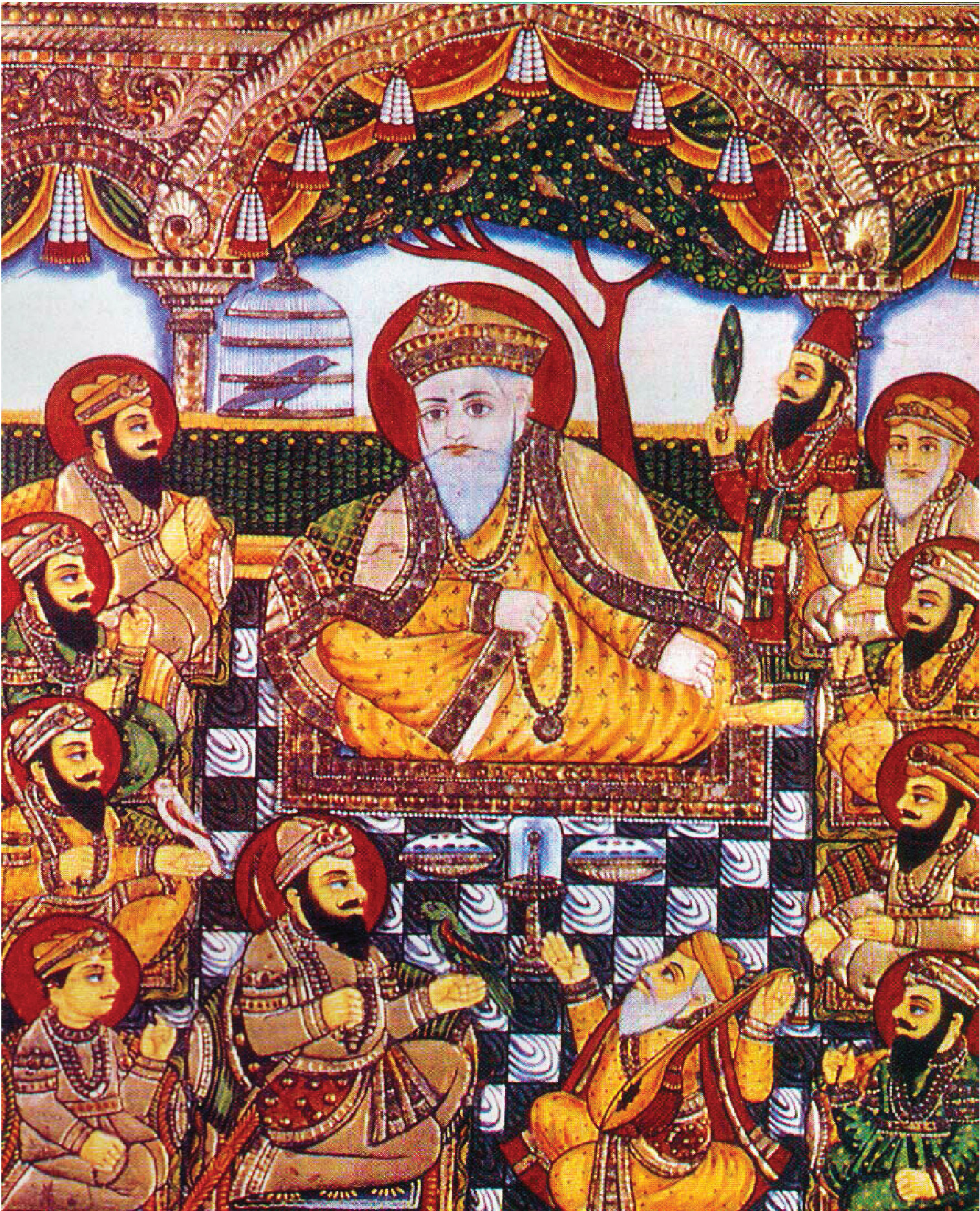
My home town of Sultanpur Lodhi in Punjab is amongst one of the most ancient cities of India. The first Sikh Guru, Guru Nanak Dev Ji, spent 14 years 9 months and 13 days in Sultanpur Lodhi. In 1497 Guru Nanak Dev disappeared in rivulet called Kali Bein and re-appeared after 3 days with Mool Mantra and started his first Udasi (Sacramental Journey) to spread the Sikh faith. Guru Nanak Dev Ji was born on 29th Nov. 1469 (on full moon day in the month of Katak- Nov.-Dec.) at Rai Bhoi Di Talwandi (present day Nankana Sahib in Pakistani Punjab). on 12th November 2019, Sikhs across the globe will be celebrating 550th birth anniversary of Guru Nanak Dev Ji and my town will feature in one of the biggest celebrations of Guru Ji’s birth anniversary. Guru Ji traveled far and wide teaching the message of God who dwells in all his creations and constitutes the eternal truth. During childhood days my parents and grandparents used to tell a number of stories on Guru Ji’s teachings and those stories helped shape my world view. My this blog is dedicated to 550th Birth Anniversary of Guru Nanak Dev Ji. Here are 5 life lessons we can learn from Guru Nanak Dev Ji. 1. Gender Equality It is a sad truth that women are not treated fairly and equally in today’s society and are subjected to discrimination and violence. 500+ years back, Guru Nanak Dev ji promoted the equality of genders, and laid the foundation of a system that gave women equal rights in all aspects of life. Guru ji says, “From woman, man is born; within woman, man is conceived; to a woman he is engaged and married. Woman becomes his friend; through woman, the future generations come. When his woman dies, he seeks another woman; to woman he is bound. So why call her bad from whom kings are born.” 2. Guru Shows You the Path Guru Ji were marked by divine grace and had keen interest in spirituality and divine subjects. When Guru Ji went to school on the very first day he astonished his teacher by describing the implicit symbolism of the number 1 (One) as Ek Onkar meaning God is One. Guru Nanak Dev Ji learnt lessons of spirituality from his elder sister Bibi Nanaki. Bibi Nanaki helped Guru Nanak Ji to understand the true meaning of spirituality and direct his energies in right direction. Bibi Nanaki was not only spiritual Guru of Guru Nanak Dev but also she was the first Sikh to follow the path of Sikhism. Guru is the voice of the God and only a Guru can show you the right path which leads towards God. 3. Work Life Balance and Spirituality Guru Ji never left his house in search of God. He had a perfect Work Life and Spiritual balance. He worked as accountant in charge of grain stores during days and spent his evenings with his family but once his family would sleep, Guru Ji would meditate all night without disturbing any of his family members. Guru Ji didn’t support monasticism and lead the life of honest householder. We can learn to balance Work Life and Spirituality from Guru Ji’s life. 4. Merit Comes First When Guru Ji decided to select his successor, Mata Sulakkhani, Guru Ji’s wife, requested Guru Ji to give Gurgaddi (Spiritual Throne) to one of their sons. But Guru Ji put both his sons along with Bhai Lehna Ji and many other followers to severe tests to check their level of spirituality and understanding of other divine subjects. Bhai Lehna Ji was the only one to pass all the exams and various tests. Guru Nanak Dev ji chose Bhai Lehna Ji over his own sons. Guru Ji named Bhai Lehna ji as Angad (from Ang meaning part of his body). If you are on a bigger mission you should select your partners/team members on merit and not on their background or reference. 5. Say No Discrimination and Superstitions Guru Nanak Dev Ji was strongly against divisions in race, caste and discrimination. Guru Ji fought against discrimination with the help of his companions Bhai Mardana, who was a muslim, and Bhai Bala, who was a hindu. Both of them were with Guru Ji because of their merit and not because of their religion, caste or race. Guru Ji questioned a number of superstitions and beliefs which were prevalent at that time. A number of people believe in superstitions without questioning the ideologies behind the same. One should question the rationale behind all superstitions. And one should not discriminate in people who all are God’s own creation. This Gurpurab May Guru Nanak Dev Ji bless you with more happiness and more peace. Happy Gurpurab!

Life Lessons from Bird Watching

I was a toddler when my parents used to take me to ‘Dinga Pull’, a local pond, near my home town of Sultanpur Lodhi in Kapurthala District. The pond was full, of a number of local as well as migratory birds like cranes, black winged stilts, herons and geese etc. Those were the days when air conditioners were a luxury only a few could afford. And most people used to sleep on rooftops during summers. Early in the morning everyday, I used to count number of big flocks of migratory birds. And I didn’t realize when bird watching became my hobby and continues to be the hobby I enjoy the most until today. The only difference is now I capture them in my digital memory as well. What amazes me the most about the birds is the variety of color, sizes and feather styles they exhibit. I love to watch them sing, dance, feed their chicks, eat, fight and sometimes trick human beings. My grandmother had at least two to three stories to tell on each bird I used to tell her about after coming back from my bird watching expeditions. In Greek culture the hell is described as ‘Averno’ a place without birds and I too believe in the same. God has surrounded us with birds and in our culture birds are symbol of our faith and trust on God. In addition to being impressed by the sheer beauty and diversity of the bird kingdom, I am equally amazed by their mannerism and behavior patterns. Over many years, I have learned a number of life lessons from bird watching and in this post I’ll share some of the key ones. 1. Evolution Sixty Six million years ago a ten kilometer wide asteroid collided with Earth; such was the impact of the collision that the dominant animal group at the time, the mighty dinosaurs went extinct, at least most of them. Though the impact was equivalent to a force of millions of nuclear bombs and eventually ushered in a nuclear winter like scenario for Earth’s climate, still one peculiar type of dinosaur made it through the catastrophe and survives today. We know the current descendants of these dinosaurs as ‘Birds’. There have been a countless studies to why did ancestors of modern birds survive while many of their close relatives succumbed. Recent research suggests that prior to the extinction event, a line of the dinosaurs shrank in the size gradually over millions of years as they developed flight capabilities and beaks (instead of teeth). And they were able to sustain themselves eating seeds long enough to survive the climate conditions and emerge as survivors. Evidence also suggests that seeds are usually tough naturally and can withstand catastrophic phenomena. It’s possible that changes in diet actually lead to leaner structure overtime and their bones and muscles evolved become lighter (and therefore the flight). This was possible in part because birds evolved and adapted to the environmental changes. And of course the conditions created by the collision were favorable to their long term survival, so they got lucky as well. In order to grow and to be successful in our lives we also need to change and adapt as per the situation. 2. No One Wins Alone Birds fly in V shape formation and each formation has a leader and each member of the formation follows the leader. When the lead bird flaps its wings it creates uplift for the followers and helps save their energy and they can fly farther. When the leader gets tired another member from the formation takes his place and the leader shifts to another position without any feeling bad about losing his position in the formation. Once they reach their destination their hierarchy ceases to exist and all of them spend time with each other as equals. If they see any danger they shout and also tell others about the danger. A great team beats a great individual any day. When you surround yourself with like minded people with a winning attitude you benefit from fresh ideas, profound insight and positive energy. 3. Know the Route and Travel Together Migratory birds fly thousands of kilometers every year and they follow the same route for generations. As they say, “if you want to go fast, go alone and if you want to go far, go together.” No one understands this phrase better than birds. They fly together as flying together increases their chances of survival. 4. Wake Up Early You will never find a bird sleeping late in its nest. Birds wake up very early and welcome the sun with beautiful songs and start their routine with positive energy. This is one trait found in all successful people world over- they all are early risers and start their day when others are still sleeping in their beds. If you want to develop habit of waking up early click here. 5. Self Care Birds struggle the whole day feeding and taking care of its ever-growing chicks, still you will not find a single bird untidy. Birds take care of themselves and they keep themselves clean and tidy. When we are stressed at work with loads of to do list and overdue tasks, the first thing we do is to skip meals, stop exercise and ignore our social life. Ignoring self care only makes things worse. Self care helps us in preventing the overload burnouts, reducing the negative effects of stress and helps us to refocus. If you can’t take long breaks to rejuvenate your energies even small breaks go a long way to help you perform better. 6. Come Back Home Birds start their day early for the search of food and sometimes they fly to distant places looking for food but when sun sets in they always come back to their nests. A number of people ask where do migratory birds belong to and I always answer that their home is where their families are. Travel… Continue reading Life Lessons from Bird Watching

Management Lessons from Ali Baba & Forty Thieves

Ali Baba and 40 Thieves is amongst most told stories from the Arabian world and I am sure most of you must have listened to this amazing story.  I came across this amazing story recently while preparing for my upcoming program and immediately some thoughts crossed my mind. In this post I’ll share the Management Lessons from Ali Baba & Forty Thieves. Here is the story of Ali Baba & Forty Thieves* Ali Baba and his elder brother Qasim are the sons of a merchant. After their father’s death, the greedy Qasim marries a wealthy woman and becomes well-to-do, building on their father’s business. Ali Baba marries a poor woman and settles into the trade of a woodcutter. One day, Ali Baba is at work collecting and cutting firewood in the forest, and he happens to overhear a group of 40 thieves visiting their treasure store. The treasure is in a cave, the mouth of which is sealed by magic. It opens on the words “open sesame” and seals itself on the words “close sesame”. When the thieves are gone, Ali Baba enters the cave himself and discreetly takes a single bag of gold coins home. Ali Baba and his wife borrow his sister-in-law’s scales to weigh their new wealth. Unbeknownst to them, Qasim’s wife puts a blob of wax in the scales to find out what Ali Baba is using them for, as she is curious to know what kind of grain her impoverished brother-in-law needs to measure. To her shock, she finds a gold coin sticking to the scales and tells her husband. Under pressure from his brother, Ali Baba is forced to reveal the secret of the cave. Qasim goes to the cave, taking a donkey with him to take as much treasure as possible. He enters the cave with the magic words. But in his greed and excitement over the treasure, he forgets the words to get out again. The thieves find him there and kill him. When his brother does not come back, Ali Baba goes to the cave to look for him, and finds the body quartered and with each piece displayed just inside the cave’s entrance, as a warning to anyone else who might try to enter. Ali Baba brings the body home where he entrusts Morgiana, a clever slave-girl from Qasim’s household, with the task of making others believe that Qasim has died a natural death. First, Morgiana purchases medicines from an apothecary, telling him that Qasim is gravely ill. Then, she finds an old tailor known as Baba Mustafa whom she pays, blindfolds, and leads to Qasim’s house. There, overnight, the tailor stitches the pieces of Qasim’s body back together so that no one will be suspicious. Ali Baba and his family are able to give Qasim a proper burial without anyone’s asking awkward questions. The thieves, finding the body gone, realize that yet another person must know their secret, and they set out to track him down. One of the thieves goes down to the town and comes across Baba Mustafa, who mentions that he has just sewn a dead man’s body back together. Realizing the dead man must have been the thieves’ victim, the thief asks Baba Mustafa to lead the way to the house where the deed was performed. The tailor is blindfolded again, and in this state he is able to retrace his steps and find the house. The thief marks the door with a symbol so the other thieves can come back that night and kill everyone in the house. However, the thief has been seen by Morgiana who, loyal to her master, foils the thief’s plan by marking all the houses in the neighborhood similarly. When the 40 thieves return that night, they cannot identify the correct house, and their leader kills the unsuccessful thief in a furious rage. The next day, another thief revisits Baba Mustafa and tries again. Only this time, a chunk is chipped out of the stone step at Ali Baba’s front door. Again, Morgiana foils the plan by making similar chips in all the other doorsteps, and the second thief is killed for his failure as well. At last, the leader of the thieves goes and looks himself. This time, he memorizes every detail he can of the exterior of Ali Baba’s house. The leader of the federation pretends to be an oil merchant in need of Ali Baba’s hospitality, bringing with him mules loaded with 38 oil jars, one filled with oil, the other 37 hiding the other remaining thieves. Once Ali Baba is asleep, the thieves plan to kill him. Again, Morgiana discovers and foils the plan, killing the 37 thieves in their oil jars by pouring boiling oil on them. When their leader comes to rouse his men, he discovers they are all dead and escapes. The next morning, Morgiana tells Ali Baba about the thieves in the jars. They bury them, and Ali Baba shows his gratitude by giving Morgiana her freedom. To exact revenge after some time, the leader of the thieves establishes himself as a merchant, befriends Ali Baba’s son (who is now in charge of the late Qasim’s business), and is invited to dinner at Ali Baba’s house. However, the thief is recognized by Morgiana, who performs a sword dance with a dagger for the diners and plunges it into the thief’s heart, when he is off his guard. Ali Baba is at first angry with Morgiana, but when he finds out the thief wanted to kill him, he is extremely grateful and rewards Morgiana by marrying her to his son. Ali Baba is then left as the only one knowing the secret of the treasure in the cave and how to access it. This is how this story ends for everyone happily for everyone except forty thieves. The forty thieves were rich and powerful but still they not only lost all their fortunes but also their lives. Ali Baba was neither more powerful nor smart still he managed to get everything by making best use of… Continue reading Management Lessons from Ali Baba & Forty Thieves