Tips For An Awesome Co-Facilitation (Last post of the series)

In my last post on ‘The Art of Co-Facilitation’ I talked about Co-Facilitation, its types, advantages and potential disadvantages. A co-facilitation program is very different than conducting a solo program as a lot of planning and co-ordination needs to be done with the partner facilitator. Following are some quick tips for an awesome Co-Facilitation: Before the Program Plan and Document: This is the first step before every program. Write down the plan on a piece of paper or a word document. Make sure your plan includes the agenda, session plan, time allocation and key deliverables by each of the facilitators. With this the co-facilitators can further plan their individual sessions, who’ll take lead on which part of the program, and who will be responsible for logistics. Share Expectations: Before you go for the program you need to share your expectations with your co-facilitator as he may have a different understanding of the co-facilitation and any disconnect between co-facilitators lead to conflict and ruining the program. Leveraging Strengths: Co-facilitators may have different styles and capabilities. You must discuss your strengths and weaknesses and plan how you can leverage on each other’s strengths to run the program successfully. Practice: Practice gives real time feedback on the flow and various other aspects of running a co-facilitated program. It helps in testing assumptions and fixing the time for various interventions. Doing this actually helps you to intervene if your co-facilitator deviates from the plan. Inspect the venue: Have a look at the venue and check the sitting arrangement, various logistics, sitting arrangement for the co-facilitator. During the Program Support your co-facilitator: While your co-facilitator is conducting an activity you need to pay attention as he may need some props or your help to keep scores etc. or you may write on the white board while your partner is having some discussion with the participants or you may help your co-facilitator in distributing handouts/books etc. Neither interfere nor contradict: Very basic but very important. Neither interfere while your co-facilitator is conducting some activity nor contradict him (unless it’s critical for learning). I strongly recommend when one facilitator is conducting his part of the program the co-facilitator should be out of the sight of the participants as if both of the facilitators will be there the participants may find it difficult to focus on the one who’ll be running the program. The other co-facilitator should be on the stage only if there’s some activity or he’s assisting the lead facilitator of that part of the program. Stay on time: Remember you can finish the program in designated time only if both the facilitators stay on time. If one facilitator takes more time than what is allocated, it may impact the other facilitator activity and overall program. Team Work: Co-facilitation is all about team work and you can’t be successful if your co-facilitator fails. Support each other and help each other to play your roles well. The best learning and memory you can give is of a great team work. After the Program Share feedback: It’s very important to ask and share feedback. You may ask your co-facilitator what went well? What didn’t work as planned? What is the biggest learning? How differently would you run the program during next co-facilitation? Note down the responses and refer to these when you co-facilitate another training program. Take care of the logistics: Check out the status of the logistics. There may be times when you have a lot of unused training material and you may have to courier it back. Also the attendance and other training records needs to be e-mailed and there could be follow-ups with the clients. Co-facilitators can divide and finish the tasks. Hope these two posts will help you conduct an awesome co-facilitation program. Feel free to share your experience/feedback.

The Art of Co-Facilitation

I have been a trainer and facilitator for last 11+ years and have conducted a number of training programs successfully. Recently I got an opportunity to co-facilitate a Leadership training program with my colleague Mr. Kunal Chakrabarti wherein he was the lead trainer and I was second in command. This was my first ever co-facilitation program and I was little worried so I requested Mr. Chakrabarti to help and guide me as how can we make it a success. He helped me with various tips which actually helped me to run the program successfully. In this two series blog I’ll share my views on the art of Co-Facilitation, Advantages and Potential Disadvantages and how to master the art of Co-Facilitation. What is Co-Facilitation? Co-Facilitation is defined as, “Meeting or other group process by two or more persons in a cooperative, collegial manner to achieve a given outcome. Each facilitator is capable of assuming the lead role. Those not taking the lead role can support the lead facilitator in various ways.“ In their book, ‘Co-Facilitation’, Joana Knight and Warren Scott has write, “The distinguishing feature of co-facilitation is that it is intended to be a partnership, where two or more facilitators take joint responsibility for filling the facilitator role. The purpose of this partnership is either to enable and maximize group and individual learning, or to help the group to achieve other ends such a making a business decision.” Three models of Co-Facilitation Alternate Leading: In this model each facilitator leads the part of the session. The alternating roles are decided at the time of the planning process. Shared leading: In this model the facilitators are not responsible for a specific session but they can chip in and flow out as per the need of the session. There are times when one facilitator might be in lead role and the other facilitator may chip in to explain a point or clarify any doubt. The key challenge in this model is sometimes the session is hijacked by the other facilitator giving no time to the facilitator to make his point. The Apprentice Model: In this one facilitator is more experienced than the other. The experienced facilitator takes the majority of the session allowing the apprentice (less experienced facilitator) to learn and practice safer activities. It builds the confidence of the less experienced facilitator as he knows there’s someone who can step in if things doesn’t go the way as planned. Co-Facilitation enhances the possibility and outcome of group programs, ensuring the facilitation experience comes from a place where the sum totals more than the parts. While there are a no. of advantages of co-facilitation, there are some potential disadvantages also and if you are going to co-facilitate a session you need to consider both to avoid any dangers of ruining the session. Advantages of Co-Facilitation Synergy: When people work together collaboratively and share their skills, resources and energy a synergetic effect often develops and usually the outcome of the deliberation exceeds the sum of individual contribution. Capitalizing on Strengths: Facilitators may have different styles and strengths and they can divide the session in a way that lets them to capitalize on their individual strengths. Lightens the Load: Co-facilitation eases the pressure of full responsibility. There’s a huge list of things which needs to be done before and during the session such as preparation, design, holding the space for the group, observing what is going on from a process standpoint and dealing with logistical issues. Robust Approach: It brings different approaches, attributes, energies, experiences, skills, styles and perspectives to the program and allow for a more robust approach. Enhanced Creativity: In co-facilitation different skill sets of the facilitators can be used to make the session more interesting by enhancing the creativity. Skill Development: Facilitating is a lonely activity and the opportunities for personal and professional development are less as usually the participants don’t give meaningful feedback on the facilitator competence. In Co-facilitation both the partners get feedback from each other for their work which in turn can help them to sort out the issues and become more proficient. Conserving Energy: It is very difficult to conserve your energy for a daylong session for a lonely facilitator. I remember falling ill during a training program and how hard it was to continue the session. Co-facilitator provides that breather to his peer facilitator where he can recharge himself and shine. Potential Disadvantages of Co-Facilitation Egos: Sometimes the co-facilitators do not lean into the relationship equally and they try to dominate each other and their egos may get in the way of effective co-facilitation. Competition: Sometimes the co-facilitators may become competitive with each other and adopt competitive rather than collaborative approaches. May be stressful: Co-facilitation may be stressful as there may be mismatch of the styles of the co-facilitators. Co-facilitation may be stressful for the participants as they may have to adjust as per the styles of the facilitators. Time consuming: Co-facilitation can be time consuming as it does not only need only joint planning but also evaluation and feedback. Different Styles and Orientations: Co-facilitators may have different styles and different orientations- theoretical, technical and personal- potentially spoiling the effectiveness of each other. Overtraining: With highly energetic two or more facilitators sometimes overtraining is very likely due to too many interventions which stifle both participants and learning. Blind Spots: If Co-facilitators are same in their theory/ technique and approach they are very likely to have mutual blind spots in recognizing different dynamics. There’s a possibility that both the facilitators missing out significant learning opportunities. This is first part of two part series on ‘The Art of Co-Facilitation’. In my next blog I’ll write about the ‘Tips for an awesome Co-Facilitation’. Happy Reading 🙂

Why Organizational Change Fails?

In order to survive and cope up with new challenges in the market place, almost every business goes through a very tedious task of organizational change under various names like restructuring, rightsizing, re-engineering, turnarounds etc. Only those businesses which were able to change and evolve as per the market realities have been successful. While others have failed miserably even though they were pioneers in their fields at some point. Nokia, Toshiba and Kodak were top ranked companies and dominated their respective markets. However they failed to embrace the evolving market realities and change the way they worked. And it just took a couple of years to become obsolete and none of them is in business. The only thing that is constant is ‘Change’ and there’s no denying it- change is tough. When an organization decides it needs to change certain processes/ systems, it is very common for the employees to feel uncomfortable or even intimidated. According to Rick Maruer, author of the book ‘Beyond the Walls of Resistance’ 70% of the attempts to change organizations fail. Such a high failure rate does not only lead to many missed opportunities but also waste so many scarce resources which if used well could change the fortune of the organization. Below, I share some insights   why organizations fail to implement change and what could be done to bring a successful change. Organizational change can fail due to following reasons: 1. It’s not compelling: Usually the organizational change is interpreted as more work and more stress for the same pay. Change needs a strong reason. Employees can’t be pushed to change until they are not convinced of the urgency. Employees will not  commit to change if they will not find it compelling. 2. It’s not deemed as required: Change can’t be an option. Change is a requirement. Sometimes leaders fail to understand the need of the change. They try solutions which are familiar but not appropriate to bring any change. Lack of conviction on part of the leadership leads to abandonment of change. 3. Lack of proper communication: Sometimes it is not the message but the way it is communicated that does all the harm as the leadership may find it difficult to deliver a tough message and the employees may find the message inconsistent and may interpret it differently. Consequently employees do not embrace the change and hamper the very idea of organizational change. 4. Differing Agendas: Sometimes hearing about a change many employees assess the implications for their jobs/positions and resist the change due to their ego and self interests. 5. Lack of Leadership: Though the change strategy is formulated by the senior management but it is the people at lowest level who make the change happen. Sometimes people at lower levels don’t trust their higher ups and hence don’t participate in the change management process. Due to which the intended effect becomes very difficult to achieve. And a number of times change fails for a simple reason that leaders do not know what not to do. 6. Lack of performance measures: Organizational change is all about improvement. There has to be clear set of performance measures to check whether the organization is on track. Without the performance indicators managing and sustaining change will be practically impossible. 7. Lack or poor allocation of resources: Organizational change is a long term process and it requires a long term investment to sustain. Change can fail if there is a lack of resources. Sometimes leader find it very challenging to allocate proper resources to all the areas of change and they tend to allocate more resources to certain area of change which they find more compelling while compromising other areas. – See more at: http://sankarshan.in/why-organizational-change-fails/#sthash.8cEhdX97.dpuf

Developing Ownership

Business Ownership is a looked upon personality trait for leaders, team builders and those who are managing people. Taking ownership about things is a human trait. But taking ownership of situations, circumstances and people doesn’t comes easy. A number of business managers complaint about the lack of ownership among the team members. Developing ownership amongst employees is the challenge a number of leaders come across. I was finishing up a TNA – Training Need Analysis at a Company in BFSI industry and somewhere during the process – felt that all a company lacks these days is the – Employees with ownership & belongingness as a trait. This post is been due since three weeks and the idea was to share and ponder with you my readers – on what companies can do to develop ownership among it employees? Following are few tips I could streamline, please feel free to share your take and ideas on the same: 1. Delegate Smartly: Usually employees don’t take decisions or take ownership as they are afraid of taking a decision which will not be supported by the management. This problem can be solved by delegating effectively. You need to clearly communicate the responsibility of decision making as well as responsibility of the results. When you assign any responsibility to someone you also need to give him freedom to make necessary (at least routine) decisions required to executive the assignment. For any strategic decisions regarding the project you need to take your employees in confidence. Delegation requires a lot of will, time and energy to communicate your expectations but once done properly it helps developing ownership. 2. Have a Plan: Align your team with the vision of the company and help them understand where do they fit in the picture. Once people have understanding of the key objectives, the ownership comes in automatically. As a leader you also need to ensure your team is engaged properly with the broader goals and if you help them succeed and grow, you may be surprised to see what they achieve. 3. Let Employees Speak Out: Employees feel more empowered when they are allowed to speak and contribute ideas and solutions to the problems. Their voice will define the value they bring to the organization. 4. Allow for Mistakes: As a project manager one may have to make a number of decisions in a day and there are many project managers who keep on delaying decisions as they are afraid of taking a wrong decision which may hamper their growth in the company. Allowing people to make mistakes plays a very important part in building a sense of ownership. Mistakes help people learn new lessons and broaden their horizon. 5. Create United Sense of Purpose: When you collaborate on goals and decisions with your employees and connect them to the bigger picture, they develop a united sense of purpose and they tend to be more participative and look beyond their role. The united sense of purpose that employee ownership delivers helps attract and retain the best talent. 6. Build in Daily Reminders of Your Mission: For the first time when I visited Shoppers Stop to conduct a training program, I encountered an amazing but incredibly simple way of reminding all its employees of its mission. At 10:45 am all the Shoppers Stop employees across all the stores PAN India, including their corporate office staff at Mumbai, will stand up and everyone will sing their anthem. Shoppers Stop anthem has a wonderful lyrics and reminds their company mission to their employees. I found it as a very powerful daily reminder of the company mission. Due to such inbuilt daily reminder no doubts Shoppers Stop is amongst most admired retail brands in India. 7. Reward Employees: Who Go Beyond the Norms: Nothing can quell desire to give extra than not feeling recognized. Rewarding employees who go beyond the norms helps in developing ownership amongst employees. I remember a store manager of a retail store in Mumbai opening the store very late in the night to help a customer. The customer was to get engaged the next morning but had lost her luggage in the flight. Though opening a retail store in the absence of the security staff posed a big risk but to help his customer the store manager went beyond the norms. And he was recognized for going beyond the norms and helping the customer by his company. Nothing motivates an employee more than recognizing his contribution to the company goals.   These are the 7 tips which I could think of as a practice for developing ownership among the employees. I am sure these are helpful not only for big corporates but also for SMEs, which mostly work on resource restrictions. The above pointers are also some of the reasons why some of the startups have excelled quickly.

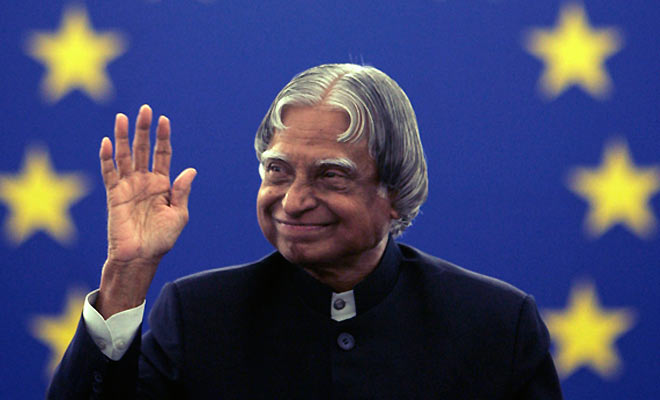
Life Lessons from Dr. APJ Abdul Kalam

It was around 7:40 pm when my wife told me about demise of Dr. APJ Abdul Kalam. I thought she must have seen the picture circulating on various social media wherein Jharkahnd Education Minister paid floral tribute to Dr. Kalam thinking he’s no more and I ignored the news. I was having dinner when I switched on to TimesNow news channels and was shocked to know whatever my wife had told was true and Dr. Kalam was no more. It was very sad news as Dr. APJ Abdul Kalam was such a big role model and inspiration for millions of people for his simplicity, humbleness and dedication towards our nation and its people. There are following life lessons we can learn from Dr. Kalam: Give Back to the Society: If you have achieved something in your lives, give something back to the society as not everyone is as blessed as you are. You need not to have a lot of money to be able to give donations to the NGOs. You can give back to the society by raising your kids well, by volunteer to help children, by providing food and shlter to someone in need and by suing your skills and teaching other. Children provide us the best opportunity to give back to the society. Learn to Manage Failure: Dr. Dhawan was the chairman of ISRO and Dr. Kalam was the project Director for Rohini Satellite Launch in August 1979. The satellite was launched but the launch rocket fell in the Bay of Bengal after few seconds of its launch and it was a major setback to Indian Space Program. The press conference was supposed to be attended by Dr. Kalam but Prof. Dhawan took the responsibility of the failure and gave assurance to the media personnel that the mission will be completed next year. Next year, in 1980, after launching the satellite successfully into the orbit, Prof. Dhawan asked Dr. Kalam to face the media and conduct the press conference. When failure occurs a leader owns the failure and when success comes a leader gives it his team. A leader should learn how to manage failure and should take full responsibility of the failure. Have a Vision/ Dream: He once said, “Dreams are not what you see in sleep, dream is the thing which does not let you sleep”. The single most important factor to drive the human civilization ahead is our Dream. If you have a dream, nurture it with hard work and whatever circumstances never let your dreams die. People with dream move far ahead than people with none. In one of his speeches at India Parliament he recited his poem, “The Vision”: I climbed and climbed Where’s the peak, my Lord? I ploughed and ploughed Where is the knowledge treasure, my Lord? I sailed and sailed Where is the island of the peace, my Lord? Almighty bless my nation With vision and sweat resulting into happiness. Humility & Modesty: Though Dr. Kalam was awarded the highest civil award of India, the Bharat Ratna, he never liked being called Bharat Ratna Dr. APJ Abdul Kalam. He even sent circular across DRDO, India’s premier research agency, to not to refer him Bharat Ratna. For a leader the ambition should be greatness of work and people rather than the leader himself. A leader should always be humble and down to earth and should keep a low profile. Follow Your Passion: Whatever you do in your lives do with passion and the success will follow. Passion is powerful feeling of enthusiasm inside us. If you are enthusiastic and passionate about your work you will overcome many obstacles and move up in your lives. Your passion helps you to improve and get better in your lives. Don’t be victim of your situations. Find something you love to do so much you can’t wait for sun to rise to do it all again. RIP Dr. APJ Abdul Kalam.

How to Wake Up Early?

I am an early riser and a number of friends ask me how to wake up early? In this post I’ll share the benefits of waking up early and some  very simple nut powerful way which will help you in waking up early in the morning. There’s one common trait found in all successful people world over- they all are early risers and they start their day when most of others are still sleeping in their beds. Waking up early is amongst the most important lessons I learnt from my parents (Click here to read). We are living in an era where people love to watch TV and surf internet till late and these days there are not many early risers. I am not saying people who are not early risers are not successful but there are a number of benefits on early risers can avail. Following are the benefits for early risers: Exercise: Mornings are the best time to exercise in fresh air. A brisk morning walk of 45-50 minutes is considered one of the best exercises for human beings. Regular exercise improves fitness, provides energy for the whole day, boosts mood and helps with deep sleep cycles. Explore Nature’s Beauty: Watching rising sun and birds flying in large numbers is amongst the best feasts of the nature. There’s nothing more beautiful than the loveliness of the woods before sunrise. Breakfast: A number of daily commuters on Delhi roads can be seen having their breakfasts in their cars as they don’t get time for most important work of the day i.e. to have breakfast. And if their mothers/wives/cooks too wake up late they leave for office without having breakfast after fasting for whole night. People who wake up early get ample time to have a healthy breakfast which will supply sufficient energy to work whole day Develop a Positive Mental Attitude: Osho once said, “Morning is the best time to meditate. After the whole night’s rest you are very close to the center of your being. It is easier to move into the center consciously early in the morning than at any other time — because for the whole night you have been there at the center, you have just left it. Deep sleep rejuvenates because, although unconsciously, you enter into the core of your being — but you still enter. All the tiredness of the outside world is taken away, and all the wounds are healed, and all the dust disappears. You have taken a bath; you have dived deep into your own being. So in the morning when you have just awakened and you are very close to the center… Soon the periphery will take you, will possess you; you will have to go into the world of occupations. Before you go into that external journey, have a look, so that consciously you can see who you are. This is what meditation is all about. Hence, down the ages, the morning, early morning, when the earth is awakening and the trees are awakening and the birds are awakening and the sun is awakening, when the whole atmosphere is full of awakening, you can use this situation. You can ride on this tide of awakening and you can enter into your own being, awake, alert, aware. And your whole life will be transformed. And your whole day will be transformed because then you will have a different orientation. Then you can go into the marketplace and still you will remain in contact with your inner core.” Waking up early helps you develop a positive mental attitude as you can prepare for the challenges ahead in the day. Take Advantage of Extra Time: If you wake up just one hour earlier each morning you would gain 15 days in a year and that extra one hour can make all the difference to your lives. You will commute in less congested roads and reach their offices on or before time if you start your day early. One of my colleagues, Mr. Sachit Jain at Bharti AXA, was used to reach office before time so that he can finish important work without being interrupted by anyone and leave on time in the evening. Better Family Life: You can finish your work on time by starting early and you can leave office on time and you can spend quality time with your family without worrying about any pending work. Various studies has described that early risers are more optimistic and have better family lives than night owls. It’s not very difficult to become an early riser. It’s just a matter of taking action with discipline and motivation. Following are some quick tips which can help you develop a habit to get up early in the morning and plan your day in a better way: Put Your Alarm Away From Your Bed: Don’t keep alarm near your bed as you will either shut it up or put it on snooze. If the alarm is far from your bed you will have to leave your bed to shut it. You are up now and all you need to do is stay up. Don’t Fall in 5 Minute Trap: Once you are up better jump out of the bed and go out of your bedroom. Don’t fall in 5 minute more trap as once people start snoozing usually they keep on snoozing again and again. Remember you lose when you snooze. It’s very easy to wake up at first attempt. If 6-8 hours of sleep is not sufficient then 5 more minutes are not sufficient either. People who fall in 5 minute trap usually end up waking up guilty for not waking up at the first attempt. Start With Decremental Timing: Don’t be rigid about waking up early. If u want to start waking up at 5am from your daily routine of 7am, don’t start waking up at 5am next day onwards. It should be decremental say by 15 minutes every 4th day. Your… Continue reading How to Wake Up Early?

Getting Out of Fire Fighting- From Reactive to Proactive Management

In my previous post I shared 7 Strategies to Revive a dying company. In this post I will share the strategies of getting out of fire fighting mode by switching from reactive to proactive management. For a project management company it’s very important to meet the timelines and complete the project in the stipulated time. If the timelines are not met the company may face severe consequences and to avoid any financial loss many projects managers start work in fire fighting mode and often compromise the quality of the work. So what could be the best management style for a project manager? In today’s post I’ll discuss how to get out of fire fighting by being proactive from being reactive manager. Managing a project is very challenging as there are many internal as well external factors involved and it’s always difficult to control both the factors. Suppose you are doing a project, say Project A, which is nowhere near completion and your client is not giving you any extension to complete the project and pressurizes you to allocate more resources to complete the project on time. Now the management is forced to bow to your clients’ demands and call people from Project B. You also have timelines to meet for Project B and you are in fix where to focus more as new team will need some time to understand the Project A . In the process the timelines to complete Project B will be compromised. Now to meet timelines of Project B more people has to be called from Project C. A number of companies fall in this vicious cycle which forces the management to always be in fire fighting mode.Now question arises what is fire fighting? Is it something related to extinguishing fire? Fire fighting is an emergency allocation of resources required to deal with unforeseen problems. In management terms, Fire Fighting is another name of Reactive Management and is defined as reacting to unforeseen problems with a focus to somehow control the situation for the time being. If management has not foreseen or planned to handle the problem these often become hectic, stressful and a routine with no end in sight. Reactive Management happens due to poor planning, bad processes/policies or not fixing the accountability and a Project Manager will never be in able to control a situation. How can one move to Proactive Management from Reactive Management? Before I explain how to be proactive manager, we need to understand the meaning of Proactive Management. Proactive Management is basically to think ahead, foresee and plan for strategies to address expected as well as unexpected problems. Following are some simple but Powerful Strategies on How to manage Proactively and come out of Fire fighting mode: Process Management Do not take decision on the basis of your experience or intelligence. You may be a blessed manager but everyone is not. Make processes for all the business needs and follow the processes religiously and keep changing dysfunctional processes. A dysfunctional process may trigger a reactive management situation. Do thorough reviews of all the processes and make checklists for each situation. Make your team understand the importance of checklists and how these can help you keep a tap on the proceedings and take corrective measures if something goes wrong Time Management (Work Prioritization): Prioritize tasks or activities into urgent or important. Finish the critical tasks first and delegate the important activities. Important activities should be finished before they become urgent and pull you in fire fighting mode again. KAIZEN: Kaizen or continuous improvement is a long term approach to work that systematically seeks to achieve incremental changes in the processes in order to improve efficiency and quality. It is responsibility of everyone and not just selected few. Management should be open to new ideas with a focus on the solution. Ask your team members about their opinion on different issues.  

7 Strategies to Revive a Dying Company

There is so much of cut throat competition these days that many business houses operate on such small margins that even a small miscalculation or a bad decision can derail the company and it becomes very difficult for the management to revive the company and put it back on the right track. In this post I’ll share 7 strategies to revive a dying company which can help the management to turn around the company: Take Care of the Cash Flow: Showing huge profits in the books is very easy but managing steady cash flow to meet company’s day to day expenses is most important and challenging task. A company failing to manage its cash flow will not be able pay its liabilities and will be heading towards failure and ultimately closure. The first step is to take care of the cash flow. Engage the customers and resolve all the pending issues in a time bound manner. Once the issues are resolved then ask for the payment and at the same time the company may ask for more business with an assurance that no such issues will be allowed to come up in future and the client needs will be given proper attention. Money Saved is Money Earned: If the management fails to control the cost it increases the debt and then interest on the debt becomes another cost and it becomes like vicious cycle and if the management waits for too long there will hardly anything left to pay out the debts. The management should be ruthless in cost cutting and there’s nothing wrong in it whether there is a shortage of cash flow or not. As they say, ‘Every penny saved is penny earned’ and sometimes each penny saved can help pay liabilities. Shrinking the company can be more profitable than running a large but sick corporation. Prioritize Your Liabilities: Each liability is supposed to be paid back and prioritizing your liabilities will help you arrange and manage funds in a more efficient way. The Govt. liabilities should be the first to be settled on monthly basis and then vendor liabilities, employee salaries and other liabilities can be prioritized depending upon the need. Change Your Customer Base: People think firing a customer is like committing suicide as we don’t only lose a customer we also lose prospects of future business. The idea here is not to become choosy about clients but to scrutinize those who increase the productivity levels and those which cause stress. The reason could be any, non-performance, delayed timelines, delayed approvals, derailed project briefings, non-payments etc. What we have to see – where & with whom are we creating mutually beneficial environment. The attempt to get better shall be made- but the idea should be – to create healthy & beneficial associations and customer undoubtedly is the biggest stakeholder. Keep Your Employees Happy: This is amongst the most important aspects management should never ignore during crisis. Having bad morale and employees scared of being laid off is a sure shot way to closure of the company. When a company runs through a crisis so does its employees and they lose motivation to stay and perform. Only motivated employees can sail the company out of the crisis. Management should come forward and communicate their strategy and seek their help to negate the crisis. If some employees are to be laid off due to cost cutting their selection should be done on merit and not on employee’s personal rapport with management. The full & final settlement of laid off employees should be done on priority. Avoid giving high salary increment fearing losing good employees. Take them in confidence, explain marginal increments and why does every penny matter for the company. Keep Your Vendors Engaged: Your vendors are your life line and if you don’t have money and have failed several times in keeping your commitments and you are not sure when will you be able to pay to your vendors the management should keep the vendors engaged. There’s no harm in telling your vendors that the company is running through a bad phase and the company intend to return each and every penny and at this moment you need their support. My experience says your major problem will be solved and there are many vendors who may extend a helping hand during critical junctures. As and when you receive payments set aside a certain amount that you will pay back to your vendors. This will not only help you pay back your debt but also keep trust of your vendors. Getting Out of Fire Fighting: Management of a company in crisis tend to spend more time by being reactive to the problem than to foresee the problem and take appropriate actions to resolve it. Sometimes management knows about the problem but is so busy tackling other issues that it ignores the problem. When backlog of problems builds up management is forced to keep long term planning aside and tackle the problem in fire fighting mode. Such reactive management is very hectic, stressful, often inefficient and becomes a routine and management hardly gets time to foresee the problem and take appropriate actions to resolve. These 7 strategies to revive a dying company if implemented correctly can turn around the company. In my next post I’ll share some strategies to get out of fire fighting mode by switching from reactive to proactive management.

Are you Listening?

Are you Listening? A lot is been said, discussed, trained, argued on listening skills. Be it a debate on television, a healthy discussion with friends, a critical board room meeting or anything – listening holds importance everywhere. If you are listening, you are alert and you are into the game. If you aren’t – you are surely missing something! While thinking about this phenomena, this practice, this significant trait, I was thinking about the 3 princes who left a great message for all of us about Active Listening. Once there was a king who had three sons. As the king was aging, he decided that he should handover his throne to his sons. He consulted to his wisest ministers and reached a conclusion that as he doesn’t have a big empire so he can’t divide his empire in three parts and give it to his sons. So he decided that he will hold competition which will assess the Princes on various parameters like intelligence, diplomacy, strategy etc. After some more consultations with his ministers he announced the competition and invited all his countrymen to witness the occasion. The competition began. The princes were given very difficult tasks to perform and they finished those tasks very efficiently. Then there was a competition to check their knowledge on topics like diplomacy, war, strategy, economics, politics etc. They all answered the most difficult questions with ease and at the end of the competition their scores tied. This was a big problem for the king as he was at the crossroads again. He announced to extend the competition for one more day and returned to his palace. He called his ministers again and discussed the days’ outcome. One of his ministers suggested something and the king agreed to him. Next day the competition begun and everyone was expecting something very tough to happen. The King gestured and there came three statues made up of Gold, Silver & Bronze. Then he asked all three prince to examine and pick the best statue. First came the Eldest, he examined the three statues and came back to his seat. Then came the middle one, he examined the statues and returned to his seat. Lastly it was turn of the youngest prince. He examined the statues carefully and after spending some time he too returned to his seat and sat. Now king called the eldest prince and asked his opinion. The eldest prince answered that the Gold statue is the best as it’s made of gold which the most precious metal and signifies prosperity. Hence the statue made up of Gold is the best. Unsatisfied with the answer of the eldest prince, the king called the younger one and asked his opinion, he answered that the Silver Statue is the best as nature of silver is cold so it would help control anger and a Kings greatest asset is to control his emotions and take a rational decision. So statue made up of silver is the best. King liked the answer but was not fully satisfied and called the youngest prince for his judgment. The youngest prince answered the bronze statue is the best statue. The King asked the reason behind adjudging the bronze statue as the best. To explain his choice, the prince asked a servant to bring a long bamboo stick. The servant brought the bamboo stick and gave it to him. Then the prince picked the Gold statue and put the bamboo stick in its ear. To everyone’s surprise the bamboo came out of the other ear. Then he picked the silver statue and inserted the bamboo stick in its ear and it came out of the mouth. After that he inserted the stick in the other ear and it came out of the mouth again. now he picked the third statue and inserted the stick in the ear of the same. Everyone was expecting that the stick will come out through other ear or mouth. But it didn’t. The Prince inserted the remaining stick in the ear but there was no sign of the stick. He placed it at its position. And picked the gold statue and then explained, Gold is the most precious metal but still the statue made up of gold didn’t make the best statue as this statue represent people who comes at a great cost to the nation but doesn’t listen to their king. If there king will say anything to them they will listen from one ear and throw it out from the other ear. Such people are of no use and should be removed from their positions. Then he picked the silver statue and explained, there are people whom you’ll consider as closest to you. If you ever share your secrets with them they will listen with both the ears and will go out and spread your secrets everywhere they go. Such people are enemies of the country hence should be dealt very strictly. Then he picked the last statue and explained why he adjudged it as the best. One should be like bronze statue and should listen to everything not only with his ears but also with his eyes and heart. Whatever is being said to him, he should be able to absorb it and utilize it for everyone. The king was so happy with the answer that he announced him the winner of the competition and handed over the throne to him. This is an old story which tells us the importance of active listening. But like most of my listeners, you must be wondering – why this story for listening? How is this relevant – isn’t this about the decision making and analysis. When I got further into the understanding, I realized ‘No’ there is a message for listening skills. Imagine the similar situations in the work atmosphere, link the statue traits to the people we work with, we meet in everyday life. There are people who listen and ignore because they are firm… Continue reading Are you Listening?