Investing at an Early Age

I was about to leave office when a junior colleague came to me seeking help in financial planning. Though I was in a little hurry I couldn’t stop myself helping him with my suggestions pertaining to financial planning. I am in my mid 30’s and now sometimes I think I should have started financial planning a bit early in my life and could have accumulated a substantial wealth till now. Saving and Investing at an Early Age is always difficult as we have so many temptations around us viz branded clothing, electronic gadgets or freaking out with friends etc. By the time people realize the value of savings and investment they are hardly left with time for the magic of compounding to make substantial additions to their investments. Here you can read why compounding is known as the 8th Wonder of the World. Following are some simple but powerful tips to save and start Investing at an Early Age and at any age: Understand You are not Going to Work Forever: Average life expectancy in India is around 67 years and if you start working at an age of 25 years you will have 35 years to work and plan for your life post retirement. One can’t plan his retirement at an age of 45-50 and even if one plans he will surely land short of money required to maintain a similar life style post retirement. The Sooner the Better: The sooner one starts investing the better the returns would be as the compounding will not add but multiply the return on investment in long run. Start with a Small Amount: You can start with a small amount but keep increasing the investments every month or quarter by 5-10%. This way you will be able to manage your expenses efficiently and will be able to utilize the funds in a better way. Have a Financial Goal: Have a financial goal before starting investing. Without a goal it will be like shooting without an aim. Financial goal will help you decide the amount of money you will need to invest, type of fund and tenure of the investments. Diversify: As they say one should not put all eggs in one basket similarly one should not invest all his money in a single or similar kind of funds. There are various Investment Avenues wherein you can invest your money e.g. Debt funds, Equities, Mutual Funds etc. Understand the risk associated with different investment funds before making any investment. Education Loan: If you have taken an education loan don’t rush to pay it fast. Banks offer education loans at discounted rates and there are many investment avenues which offer higher rate of return than the rate of interest charged by banks on your education loan. The RoI will further discount your education loan. Insurance Planning: Insurance is amongst most important investment avenues these days as it not only insures your life against any peril but also helps you make a big corpus in long term. The cost of insurance is lesser if you buy insurance at younger stage of your life and goes on increasing as you grow older. High Risk Appetite: At young age people have time in hands and their risk appetite is usually high so one can invest in funds with high volatility but high returns and make good fortunes in long run. But this luxury ceases to exist as you grow old. There are some temptations which attracts people to commit Beautiful Mistakes without worrying about their ill effects on their financial health in long term. One should avoid spending or spend carefully on the following: Credit cards/ Personal Loan: Credit cards offer hassle free shopping and are user friendly as you don’t have to pay in cash and offer to buy stuff even if you have a nil bank balance. This is where one need to be careful as people tend to spend more and impulsive buying usually is of no use and they end up buying products which will be of little utility. Similarly Personal loans comes with very high interest rates and people end up paying substantially very high than the actual loan. Though Credit cards and personal loans help to meet sudden expenses but after all you have to return the money to the bank and even an extra spend of one single time can severely affect your financial goals. Electronic Gadgets: Youngsters love to buy expensive gadgets with maximum no. of features/apps. A high resolution DSLR camera does not mean it will click better pictures. If you know how to manage shutter speed, ISO, aperture etc. then even a simple camera can click good pictures. A mobile with 256 Gb memory with 40 MP camera and 1000s of apps is of no use if you are keeping even those pictures/videos which you would have hardly watched if you had phone with lesser memory. Similarly if you are not using all the on your mobile, there is no point in spending money on such expensive mobiles just for the sake of show ups. Same goes for other gadgets. Understand your requirement and then only buy. If you can’t take care of your electronic gadgets or you get bored very easily then you must make it a point not to buy expensive ones. Car: Car is a luxury but also a big liability. Entry segment car costs more than Rs. 3 Lacs and if you take 100% loan for 5 years you will need to pay around Rs. 6600/- per month as installments for next 60 months. Plus add another Rs. 5000/- per month as running cost of the car to it. The total cost per month would be Rs. 11,600/-, and in 5 years you would spend 6,96,000/- for owning a car, which is quite big amount for anyone with no financial back up (Assuming you purchased the car in the very first month or year of your professional life). If your company is… Continue reading Investing at an Early Age

Snoozing your Success

I had an early morning flight to catch and the airport was on the other side of the city. And I needed to get up very early in the morning. I was alone at home as my family was away. Though I had set an alarm but still to be double sure I called my 10 friends, who work in US, to wake me up at 3 am (IST). It was 4am when someone knocked my door bell and I woke up and saw the cab has arrived. I was in shock as neither had I listened the alarm nor any of my friends called to wake me up. Now the situation was critical as I was to leave in next 15 minutes else I could have missed the flight. Cab driver assured me that I can take another 15 minutes and get ready. I took 25 minutes and left for the airport and I was the last passenger to enter the plane. Though I caught the flight I was in shock that how could I miss the alarm? What would have happened had I missed the flight? May be just a flight or some money or an opportunity? That was the day I realized that I didn’t snooze the alarm but I snoozed my success and whenever I snooze for 10 minutes I snooze my success for 10 minutes. I realized that snoozing is nothing but another name of procrastination and in order to be successful one need to learn how not to procrastinate and how can we manage our time effectively. What is Procrastination? Procrastination is habit of putting off or delaying things that one should be focusing on, in favor of doing something which is more enjoyable or that one which is more comfortable. Reasons for Procrastination Weak Focus Focus is the most significant aspect for any achiever. You need to lay your focus right and need to understand & prioritize. You cannot allow things/problems and people to affect your focus. Make them a part of your goal and ask things to wait, problems to get solved and people to support you in your motive. You need to work, take break, rejuvenate and get back to work. Complacent attitude towards Comfort Zone It is human nature to become complacent in an affable surrounding. But you need to check the difference between being comfortable and being complacent. It is good to take a break in comfortable surroundings but we need to watch out when we are turning complacent about it and need to get back to the work. Lazy Optimism A no. of times, people seems too optimist to see the future. Mostly, it is the lazy attitude to act which brings such damage to the ongoing pace. Better to keep going positively rather than thinking positive. An untimely break usually leads to a huge wastage of time. Bad Time-management Manage time smartly. One should keep the ‘to do list’ handy. Be it the leaders, philanthropists, successful people or even those who haven’t made it large to any lists but are happier than most follow the rules of time management. A simple example, we know that we have to rush & switching on TV at the breakfast table will cause delay, still we want to get hooked for that last piece of news. How well you manage your time is directly proportional to how far you go & achieve. Know yourself If you are able to avoid the above points and feel that you have already overcome those shortcomings that it is better to know yourself and do a quick self-assessment and find out the reasons which affect your routines and lead you to procrastination. Short-sightedness & Over-excitement are some other personality reasons which lead to a break in the pace of a task at hand. Sometimes, we get over excite about a certain new project, a personal incident that we shift our entire focus towards that particular stance and leading to procrastination of the goal. Overcoming Procrastination The point here is – How to Overcome Procrastination! Self-analysis The first & foremost requirement is to do self-analysis and find out what disturbs your concentration and what leads to distractions. The best way is to take a pen & paper and make notes of what takes away your focus and then make a list on – How to stop this from happening? Manage your Time Well If you have realized that some habits and practices are leading to procrastination, immediately you need to manage your time in a way that you do not end up in such situations again. Start making Task lists and assign them time-lines and if it still doesn’t help – break the tasks into smaller chunks and set shorter goals which combined lead to a larger perspective. Change the Order of Deliverable If you think that there are certain tasks you aren’t able to accomplish on timelines. Keep it aside and take the projects which excite you more at that particular time and get to work. Doing this will bring back your confidence and it will help you get back to normal routine where you want to excel & finish up the tasks. The feeling of that small accomplishment will give you the required push for bigger assignments. Change the Work-station Very often it is seen & observed that a change in place works as magic to many. People call it funny, some say these are misbeliefs, but a simple logic of this is it breaks monotony. We humans become slow when we work in a monotonous environment. A good change is well advised for. If you are really cringed to same work for longer hours or week and you feel – you are not able to really add value, it is time to change your workstation. Before it starts leading to procrastination, it is time to change the work-station and bring a fresh spark to the perspective. Unschedule/ Unwind & Plan Sometimes, doing… Continue reading Snoozing your Success

Meetings and Minutes of the Meeting!

Ever since I got into this Change Management role for organizations, I have realized that it is important to be attentive not just in the meeting but even before & after them. Apparently, they are also important because meeting take place when everyone is busy with their regular tasks at job – the junior staff, middle manager and even the top management is busy their core responsibilities, big decisions – and to avoid the misunderstandings, to avoid a situation where things slip away from our preoccupied minds, Minutes of the Meeting is a good idea and shall be followed as a work ritual. Plan for a meeting If you are the one who had called for the meeting, it is recommended you appoint a person to take down the minutes of meeting. Right from the agenda of the meeting, date & time for meeting, the attendees should be recorded. It is always better to set the outline for step 2. This should be done closely with the meeting chair. And outline helps in case the minutes of the meetings are asked to be shared as handouts for one and all. For an even detail understanding you can also refer to the Robert’s Rule. What to Record It is very imperative to understand the Agenda of a meeting and what are the results sought from it. One must keep note of the following: Motions discussed Acceptance & amendments made in ongoing business functions The significant decisions made The strategy talked about & chosen to be incorporated for Timelines discussed Roles & responsibilities shouldered on Review Meeting – date & time The above points are important to make sure that a meeting time is well utilized and optimum results can be expected. While now we know what all should be a part of MOM, here are few tips which one must know to write the MOM effectively, Create an outline/template. Take the attendance – this is helpful also when you do not know everyone who is a part of the meeting. Do not try to take dictation or capture it all, understand the importance of MOM and accordingly make notes. There is nothing wrong in asking for clarification. Make sure you MOM is all correct & validated information. Make a Call to Action head in the MOM and consider getting it signed/validated by the members involved. How to Write the Minutes of Meeting? Now that we know what all to record, it is important to understand the process of writing minutes of a meeting. The following are the points I follow to write minutes of the meeting: Take important notes during the meeting and do not try to capture it all as that might lead you to concentrate only on making notes and disturb your participation in the meeting. Complete the document right after the meeting to avoid missing on any important points. Edit to ensure clarity and detailing. For Board meetings, mention the important arguments made for decisions made. Be objective and avoid repetitions. Make sure that you do not end up writing anything which sounds like a Personal Observation. Attach any referred documents, reports based on which the decisions were take as appendix with the MOM. Sharing Minutes of the Meeting The most commonly used sharing mode for MOM is – email to the attendee as an official record. However, MOM for some of the top level/board meetings is also converted into hand-outs for future actions and timely actions. Technology has made it easier and offers many more options through – Cloud Sharing. MOM can now be shared instantly through Google Docs, OneNote, and Ever Note etc for instant & easy discussions. They offer the ease to access and edit the same document to all the users it is shared with and hence more time & effort saving. As a conclusion, we must understand the importance of MOM, they are significant for they are a record of important discussions and also they mark the future course of prominent actions being devised for business.

Har Har Mahadev- Each One in Himself (People Empowerment Perspective)

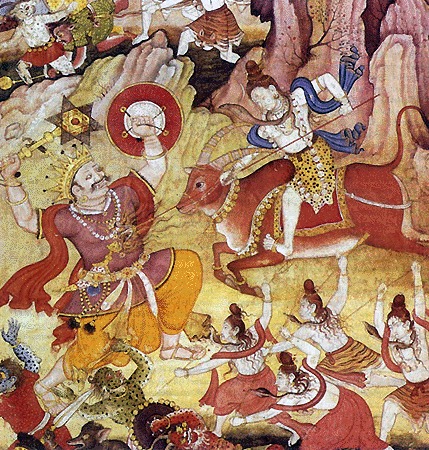
Our ancient literature and mythological books are full of stories – citing friendship, faith, dutifulness, leadership, dedication, compassion etc. Like always, I get ideas – relating their perspective to our jet age life, where I deal with people at various levels in different organizations. Being a L&D professional I have been working on bringing change to organizations and wondered if I could really link the very phrase‘Har Har Mahadev’. We all have heard this phrase several times in temples, in recitals and in prayers. The perspective clicked to me while reading about the Dharamyudha in which Lord Shiva, the Mahadev as explained by Amish in his book, coined the phrase to empower his team of warriors. I learned a new perspective of people management and people empowerment while reading this particular part in the story. It is the battle field and the entire team is ready to work for the betterment of their reign and its people. The weak, the strong, the proven and the laggards – all want to contribute and excel. Identifying traits & Leadership Style In ancient times, it was one God, one king or one leader for all. The delegation though happened in those times too but was only limited to the set of duties. The belief and onus of responsibility was put on just one person of each clan – in this case, it is the ‘Neelkanth’ – who was believed to be the messiah for the people of Meluha who waited for him to come & fight for their rights and save them from the Chandravanshi’s and the Nagas. Now the ‘Neelkanth’ has arrived who is like a new leader who is given the onus of leading the state in the best way possible, as per the rules laid by the state which has its own weaknesses and threats owing to the idealism and self belief of the population. He is trying to get into the system as he apparently is highly opinionated and believes in Karma – the good and bad. He is someone who doesn’t believe in being restricted by the man-made rules and believes in the Power of Expression, Equality and Performance over scores & class. Now isn’t that something which we all are aiming for in life and more importantly in everyday work life? We all try each day to strike a balance with our leaders (read bosses) who we want to be non-biased. A participant leader is always a welcome in a career life. It leads to mutual growth and understanding. It is the thing everybody hopes for to make the journey pleasant. Authority If a person seems important to us, we listen to that person. The person who is perceived as an outsider suddenly is been looked up to and heard of as a leader, a savior. Reason – we feel the person is important, possess power and authority and can help us gain benefit. Authority is a decisive adjective and that is why people in authority shall be chosen with great discretion and in full faith. While Shiva coined the term ‘Har Har Mahadev’ for his team, he wins hearts and trust of his team. Because he embraced authority with great liberation and he shared his power with his team by delegating the authority and empowering the meritorious. In the mentioned Dharamyudh its ‘Drapaku’ who is made the leader by Shiva for his pure talent & patriotism for the state. People Empowerment The above two are only considered worthwhile if they are used for the growth & up-liftment of the team, the resources and are made to work towards a goal which will yield results that are good to the people, the organization at large. Where it is the contribution and the result that matters most, the delegation of the team is done as per the skill-set possessed by each of them and where the sense of belongingness is inculcated deep within. The story about inception of the phrase ‘Har Har Mahadev’ guided me to the base of this human resource practice. It is about the following qualities which enable employee empowerment. When Lord Shiva told his team that it is not about him being a Mahadev but it is that each one around is a Mahadev in himself. Here, he is bringing in the concept of people empowerment and bringing in the sense of belonging which is currently practiced as ‘Employee Management & Industrial Relations’. This is what the current day HRM practices aspires for. Team, group dynamics and synergy are not just terms – they really carry a lot of meaning & weightage. The age old literature, the history vouches for it and the present day start-ups seems friendlier towards it. They value individual traits, personal skill-set, personality and interests more than the KRA, the task at hand and the targets on paper. The ancient mythological philosophies certainly carry a lot of management lessons and this is what stuck my mind when I read about ‘Har Har Mahadev’. Particularly if we talk in context of team empowerment, participant leadership, passion & compassion before rules, Lord Shiva gives me so many relevant stories.

Guru Dakshina- Proudest Moment of a Trainer

Today was the last day of my training program for Kolkata Shoppers Stop. Though I was not well for last couple of days I worked hard to make it a success. Post my session while I was packing my laptop, I saw my students discussing something and they asked me to wait for some time. I was to meet a friend on the way back to airport and it was not possible for me to wait for long. I told them about my plan and left the training room. When I was about to enter the lift a couple of students asked me to come to the training room. I walked back to the training room and to my surprise there was a big cake which they arranged as Guru Dakshina for successfully completing the training program. I invited everyone to hold hands and cut the cake together. Post the cake cutting ceremony they gifted me a big greeting card and a couple of gifts. I was in dilemma as I can’t accept gifts from my trainees. Shoppers Stop Unit Head and Unit HR asked me to accept the gifts as Guru Dakshina. Usually I don’t accept gifts from my trainees but on my colleagues from Shoppers Stop’s insistence I accepted the gifts. While I was about to leave the training room a couple of students tried to touch my feet. I stopped them from doing so, hugged them instead and thanked everyone for their kind gestures and left the training room. Guru Dakshina for me I started my journey for the hotel and all my way I kept thinking about my students, the respect they showered and the ‘Guru Dakshina’. As a professional I get my professional fees for the training programs. Do I have any moral right to accept such gifts as ‘Guru Dakshina’? I don’t have the answer and I doubt there can be any answer for this question. The only thing I want from my students as Guru Dakshina is wherever they go and whatever they do, they must do it with Belief, with Passion, with Enthusiasm and with keen Desire to excel in their lives. My proudest moment would be to see all of my students having accomplished their life goals and helping others accomplish their goals as well.

Delegation in Ramayana (Mythology & Management)

Stories are the best ways to overcome obstacles of learning. While I was working on a leadership program I came across two stories from our mythology which helped me to explain the concept of delegation to my trainees. In this blog, ‘Delegation in Ramayana (Mythology & Management) I’ll share both the stories and how these stories explain the delegation. First Story Lord Ram helped Sugriva to regain his honor and made him king of Kishindha. Sugriva and vanars decided to help Lord Ram unite with his wife Mata Sita who was abducted by demon Ravan. The entire Vanar army was divided into four groups and sent in four directions to find Mata Sita. Hanuman, Angad and Jambavantha with their group reached the southern seashore. They met Sampati, a vulture, who tells them Mata Sita was abducted by Ravan and is sitting under a tree in Lanka, which is on the other side of the ocean. Upon encountering the vast ocean, every vanara begins to lament his inability to jump across the water. Hanuman too is saddened at the possible failure of his mission, until the other vanaras and the wise bear Jambavantha begin to extol his virtues. Hanuman then recollects his own powers, enlarges his body, and flies across the ocean. After he finds Sita in captivity, Hanuman reveals his identity to her by giving her ring of Lord Ram. He reassures her that Lord Ram has been looking for her. He offers to carry her back to Lord Ram, but she refuses his offer, saying it would be an insult to Lord Ram as his honor is at stake. She gives her jewelry to Hanuman Ji and asks him to give it to Lord Ram. Second Story To seek a peaceful solution, Lord Ram sent Angad as messengers to convince Ravana to return Mata Sita peacefully. As this was the only way to avert the war. Angada tried every means to convince Ravana, but he was firm to face battle instead of returning Mata Sita peacefully. Angada planted his foot firmly on the ground and challenged anybody in the courtroom to uproot his foot. If anybody were to accept the challenge and was successful, Lord Ram would concede defeat and return without Mata Sita. All the commanders of Ravana’s army and even his son ‘Indrajit’ tried to lift Angada’s leg but none succeeded. Feeling humiliated by this failure, an infuriated Ravana slowly walked towards Angada’s planted foot and just as he was about to hold Angada’s leg to attempt the challenge, Angada moved away and Ravana fell down. Angada explained that the challenge was for Ravana’s commanders and not for Ravana. He told that Ravana was prepared to fall on his feet but instead he should choose to fall on the Lord Ram’s feet, for those are the ones that remove fear of cycle of life & death. He then picked up Ravana’s crown which fell down on the ground and threw it out of the palace. Ravana ordered his men to kill Angada. But he took a jump and flew back to the place where the Vanara army was gathered. Lessons: Mythology & Management These two stories give us very important lessons of management in purview of Delegation. See Lord Ram as CEO of company and observe the power of delegation being expelled and carried off by him. When the thought struck my mind, I got another reason to reassure myself that management certainly is a derivative of mythology. Lord Ram, put across the problem and took up a discussion to suggest solutions. He was aware of his team strengths and weaknesses.  Lord Ram also knew about the importance of each task to their organization and the task @ hand. Accordingly as per the skill set and the importance of task – he further went on to strategic delegation among the team. That is the reason why Hanuman in story 1 was assigned the task to find Sita and to reconfirm her presence at the Ashok Vatika. He was assigned the task based on this physical skill set and presence of mind. And Sita like an ardent associate understood the importance of task delegated and din’t asked for any further help or assistance. In management context, an extension further to delegation leads to imbalance and hence grievance. And that is why the delegation holds lot of importance. Coming to the second story, Angada was delegated a task of authority. He was a messenger deployed to discuss the suggested way out, to avoid war. His skill set included assertiveness, authority, communication skills and he knew temper control which wasn’t a case with Hanuman as he was an emotional devotee of Lord Ram and would never listen to any ill words for Lord Ram. Lord Ram knew of his skill set and his power. And hence the delegation was done accordingly. These two stories embark all the 5 Stages of Delegation. Where Lord Ram, observed and realized the strengths of his team members including Hanuman, Jamavanth and Angad. He evaluated the situations and the employee skill set, he made sure of the circumstances and allowed his team to collaborate and that’s how he delegated.

Journey to Excellence

Have you ever wondered what is the definition of Best? What is definition of Excellence? What is the definition of Perfection? Here is a small story which not only helped me to understand the meaning of The Best, Excellence and Perfection but also guided me towards journey to excellence. In ancient Rome, Romans had a very large number of Slaves. The behavior of Romans with their slaves was very cruel. Even for slightest mistakes the slaves were punished very harshly. Killing slave was not an offense in Roman law and Romans used to explore new ways to torture their slaves. If any of the slaves tried to escape from his master, there was only one punishment, slow but very painful death. This was also used to refrain other slaves from running. All the roads were well protected by the Roman army and a big jungle was the only place where slaves could hide themselves. But the jungle was full of wild animals and it was considered impossible to cross jungle without any protection. Romans calculated if someone was to cross the jungle successfully he will have to run like a leopard else he will be chased and killed by wild animals. It needed a superhuman to run at such speed hence Romans never tried to protect the road leading to jungle. Still in ancient Roman texts there are tales of many slaves who were able to cross the forest successfully and live a free life. When modern medical science came to know such stories they started testing human body if it was capable of running long distances at fast speeds. After so much of research medical science concluded that human body is incapable of taking this much of stress and if someone tries to run faster than the maximum speed described in the study his blood pressure will rise to such a level that he will die of a heart attack. They gave a bench mark that a human can’t run a distance of 400m in less than 50 seconds. On 29th Sept. 1900 Maxie Long of USA covered 400m in 47.8 seconds breaking the bench mark set by scientists. Time taken by Maxie was a world record in athletics and he was considered the best. Scientists said Maxie Long has something special that made him capable of covering 400m in less than 50 seconds. On May 27, 1916 Ted Meredith of USA broke this record by 4 seconds. Now 47.4 seconds was the new bench mark. On 18th Oct.1968 Lee Evans of USA covered the 400m in 43.29 seconds to reset the new bench mark. On 17th Aug. 1988 Reynolds set a new world record to cover 400m in 43.29 seconds. A new bench mark. And on 26th Aug 1999 Michael Johnson of USA made a new world record and covered 400m in 43.18 seconds. Michael Johnson’s world record still standing tall and has not been broken. Today how many of us know Maxie Long of 1900, let alone remembering him. People talk about Michael Johnson of 1999 and they will talk till a new athlete comes and reset the bar higher. In last 100 years the bench mark in athletics has been reset at least 25 times by different athletes. No one talks about athletes who were the best of their times and raised the standard to new levels. We remember people who keep raising the bar continuously and keep improving their own bench marks. Yesterday’s best can’t always be the best. It may not even considered to be good tomorrow. So what is the Best, Excellent and Perfection? There is nothing called Best, Excellent or Perfection. It is all about improving, getting better and better and raising the bar to next level. Hope you too are on your Journey to Excellence. Happy Journey!

God’s Companion

Have you ever wondered why do people take birth? What makes them take birth? They have friends, relatives, companions. Who is God’s companion ? Here is a small story, I was told in my childhood and the lesson to be learnt. God is one and he is the supreme power. Because God is one so he feels very lonely and he is very tired of his loneliness. He wants to have a companion with whom he can talk, play and spend time. So what he does is he makes his replica, a sculpture, of sand and then he adds life to it and examines if it is worthy enough to be God’s companion. If he finds any drawback/ weakness in his replica he throws it on mrityulok (earth). And here on earth human take birth. We are exactly like him, his true replica. We have most of his strengths and yes! some weaknesses too else he wouldn’t have sent us to earth. The day he will be successful in making his true replica, his eternal companion, he will stop making other sculptures and then no human will take birth on earth. I believe every bit of this story and I am firm believer that the mankind has been blessed tremendous potential. I wonder when people say they have so many weaknesses and only they want is to get rid of their weaknesses and not to work on their strengths. They forget that they were created by God to be his eternal companion. Story of a child There was a child, who was considered as a bully, a school dropout. Normally one would consider him to be someone who will struggle in life but this boy was different. He had a special talent of batting. He started practicing in nets for hours. When he was aged 16 years and 205 days, he was picked up to represent India against Pakistan. He made 15 runs in the first test he played and was out on a ‘duck’ in his first international one dayer. But so determined was he that he wrote history in international cricket for being the first player to score a century of centuries. There is hardly a record which is not under his name. When he decided to say good bye to international cricket after playing for 24 years and was to play his last test (200th test) at his home ground ‘Wankhede Stadium’ in Mumbai, he padded up and practiced for the whole day to prepare himself for the last innings of his international cricketing career. Cricket fans who had come there to witness him practice told reporters that he practiced so enthusiastically as if he was practicing for his first game of his career. He scored 74 runs in his last test match and when he got out and was walking towards pavilion he was still thinking he should have played his shot differently. By continuously polishing his abilities he took his career to such a level of excellence that he is became a legend. He is known as ‘Sachin.. The God of Cricket’. Believing yourself, knowing and polishing your abilities can make the difference for you as well. After all almighty had created you to be his eternal companion.  

Investment Avenues

In my last post ‘Compounding- The 8th Wonder’, I had shared how small investments can give you wonderful returns. In this post I’ll share what are different investment avenues available for you to invest your money. There are two types of avenues available for investment, Financial and Non Financial. The Financial avenues of investment can broadly be categorized in Debt, Equity and Insurance. The Non- Financial avenues of investment can be categorized into Real Estate, Gold, Commodities etc. To invest in non financial instruments of investment we require a large sum of money. In my current post I’ll explain the financial avenues of investment. Insurance: Insurance is the first step towards financial freedom and one should start his investment planning by investing in insurance. There are different insurance policies like Term Plan, Endowment Plan, ULIPs, Pension Plans, Health Insurance etc. Each insurance plan covers a specific risk of the assured. Term Plans cover the risk of life of assured.  Normally these are very low cost. Endowment Plans help plan mid to long term financial goals. ULIPs are market linked insurance plans and give very good returns in the long term. Pension Plans ensure you don’t change your life style even after retiring from work. Health Insurance takes care of all the medical emergencies of the assured. Investments done in life insurance and Pension Plans are eligible for deduction under Sec. 80-C of IT Act- 1961 and investments made in Health Insurance are eligible for deduction under Sec. 80-G of IT Act-1961. Debt and Debt Instrument: Debt is a loan you give to someone where as a debt instrument is one through which you lend money to a company. There are different types of debt instruments like Savings Account, Fixed Deposit, Bonds (Debentures), Govt. Securities, Post Office Securities, Money Market Instruments etc. Saving Account: One should keep an amount equal to at least six months of his salary in savings account at all point of time. This amount should only be used as contingency fund. If you get a hike in your salary you should also increase this fund by six time of your salary increment. Banks pay 4-8% annual interest on savings accounts. Fixed Deposits: FD’s has varied maturities but had assured returns. The longer the time period better the returns will be. Penalty is charged on the premature encashment. FDs done for a period of 5 years and above are eligible for deduction under Sec. 80-C of IT Act-1961 subject to a limit of Rs. 100,000/-. Recurring Account: Recurring deposit are term deposits in which a fixed amount is deposited every month. The interest paid is almost equal to the interest paid to FDs. R A/c helps you to build up their savings through monthly installments of a fixed amount over a fixed period of time. Bonds (Debentures): Bonds has fixed maturity date and provide regular income. The market price is sensitive to interest rate and credit rating. Corporate bonds offer higher returns than the Govt. bonds. The returns are of the tune of 7-10% per annum. Public Provident Fund: One can invest from Rs. 5,000/- to Rs. 100,000/- in PPF in a financial year. You can make deposits in lump sum or in 12 installments. PPF gives a return of 8.7% per annum (in FY 2014-15). Investments done in PPF are eligible for deduction under Sec. 80-C of IT Act-1961 subject to a limit of Rs. 100,000/-. Govt. Securities: Govt. Securities are issued by central or state Govt. with a fixed maturity of period of 2 to 30 years. These provide regular income and have high liquidity low volatility. Post Office Instruments: Monthly income scheme, Kisan Vikas Patra (KVP), National Saving Certificate (NSC), Time Deposit etc. are Post Office Instruments. They are low volatile and offer returns in the tune of 8-9% per annum. Money Market Instruments: They mature within a year. They offer high liquidity, low volatility and low returns (3-4%). Equity & Equity Share: Equity is ownership in a company where as an equity share represents proportionate ownership in the company. It means you own a part of the company. There are two types of equities, Equity Share and Preferential Share. Equity Shares: There is no maturity date of equity share. If you need money you can get it by selling your equity to another buyer. Shareholders get their returns on equity share in form of dividends and also by capital appreciation. These days equity Mutual Funds are very popular as they help the investors to get maximum returns of their investments by pooling their money to invest in diverse portfolio. Investments made in Equity Linked Saving Scheme (ELSS) Mutual Funds are eligible for deduction under sec. 80-C of IT act- 1961 subject to a limit of Rs. 100,000/-. Equity shares and MFs offer high risk and high returns of the investors. One should invest in equities and MFs only after reading the offer documents carefully. Preferential Shares: Preferential Shares are hybrid instrument of debt and equity. These shares pay a fixed dividend that doesn’t fluctuate. The major benefit of preferential shares is that the owner has a greater claim over company’s assets than any other shareholder. If the company becomes bankrupt, the preferred shareholders are paid off before the common shareholders. I have tried to cover most of the financial avenues available for investment. One should start investing early to reap the benefits of compounding and should take utmost care while investing and keep updating themselves about various avenues of investment to get better returns. In case you need any information on investment avenues feel free to write at [email protected]. Happy Investing !!