Little things matter the Most!

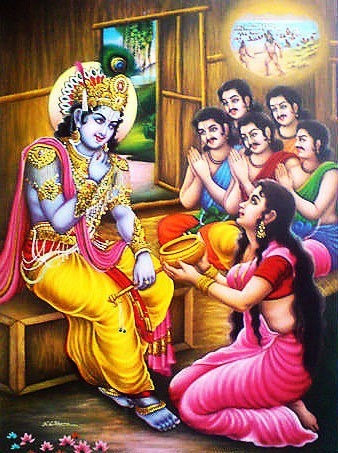
During the beginning of a training session I asked my trainees to give their introductions and also additionally they were told to tell the name of an animal they like the most and explain the reason for their liking. When everyone finished, trainees asked me about the animal I like the most. I told them that I like Squirrels the most as Squirrels remind me that whenever we are given a task we should take it as service to God and should give our 100% to it. They were curious and wanted to know the logic behind the same. I shared an incident from ‘Ramayana’- Ravana abducted Lord Ram’s wife, Sita, and took her to his capital, Lanka. Lord Ram asked Ravana to return his wife but he refused. Then with the help of Vanar Sena (Army) he decided to fight Ravana and take his wife back. They reached the southern end of the land and Lanka was on the other side of the sea and since it was not possible for the Vanar Sena to swim and cross the vast ocean, Lord Ram decided to build a bridge (Setubandh Rameshwaram) across the ocean with the help of ‘Nal’ and ‘Neel’, the Vanar princes. Nal and Neel were very notorious in their childhood and were used to throw belongings of sages in water. They were cursed by the sages that whatever they throw in water will not sink. The entire Vanar Sena started collecting the stones so build the bridge. The army was so excited that they started running around to look for biggest stones. The Vanar Sena was very strong and they brought huge stones and rocks and dropped them in the ocean. The other animals also wanted to help Lord Ram build the bridge. A small squirrel was watching this and decided to help. It thought for a while and started collecting pebbles and dropped them in the ocean. The squirrel worked hard and dropped as many pebbles as it could. Squirrel was tired but still wanted to continue the work so it rolled self in the sand, ran into water and washed. It ran back the shore rolled and washed self again and continued. While he was moving to and fro, it came in the way of a Vanar who was carrying a big stone and just survived from being crushed by Vanar. On seeing this another Vanar picked the squirrel up and threw it towards the shore and other Vanars started laughing. Lord Ram was watching all this and he caught the little squirrel before it fell. He addressed the Vanar army: “ Dear Vanars, you are huge and strong so you can bring big stones and rocks but those big stones can’t be joined perfectly and there are many small gaps between the stones. The pebbles brought by the squirrel have filled the gaps and the sand particles bind the bridge in proper shape and also make it strong. Remember, that in order to achieve something BIG one should not only concentrate on major task involved but one must take care of the small details as each step and all the efforts count equally. If you are working in a team, the efforts of all the team members, however small these may be, must be appreciated!” The Vanars were ashamed and asked for forgiveness from Lord Ram and the Squirrel. Then Lord Ram turned to the Squirrel and said, “My dear squirrel, I am sorry for the hurt caused by my army and thank you so much for helping me building this bridge. Please go back and continue your work.” Then he touched the back of the squirrel and three lines appeared where Lord Ram had touched him. Now whenever I see a squirrel, the three lines on its back reminds me that every task however small it may be, is important and significant in its own way and we should appreciate each and every contribution made by a team member (in personal or professional lives) to achieve something.

Find out stories. Follow the Do’s and Don’ts (Post 4 in Series)
We have covered the details on ingredients of a good story and how to prepare for storytelling. To follow such steps, we need to know first, where to find the right story? That is the Part- I of this post and afterwards we will discuss about the Do’s and Don’ts of storytelling. Stories are everywhere but it’s a difficult work to find a powerful story which can connect the audience to the speaker. Where to find stories from? From your own life/experiences: This is the best place to find stories from. Your stories are unique as these tell about experiences of your life. Make a list of things happened to you or your loved ones. When you tell a story from your life, you tell it with more energy and passion. You act as a source of energy for your audience and you can pull their attention towards you. Mythological stories: Myths are an integral part of human existence and such stories are proof of people’s beliefs of divine powers. The epics ‘Ramayana’, ‘Mahabharata’ and ‘Bhagwad Gita’ contain thousands of stories about ancient Indian society, philosophy, beliefs, culture and ways of life. Though these epics were written thousands of years back but still there is lot of resemblance. For example, the exact distance between Earth & Sun which is determined by NASA now is been exactly defined in the ‘Hanuman Chalisa’ years back. It is incredible to find such meaningful information and statistics which we never realized existed. Historical Stories:History is our guide to future. It not only provides the best relevant examples but also helps with the proofing of a subject. Take up the history, research the subjects and dig deep into them. You must have heard of the Panchtantra stories and the age old Fairy tales, they all still hold so much of importance & value in terms of learning. We all remember Cinderella, Snow White, Rabbit & the Tortoise, Thirsty Crow etc. Now here is a quick review to the Do’s and Don’t of Storytelling. Do’s of Storytelling 1. Keep your stories simple and to the point: Always keep your story simple and to the point as complex stories make it difficult to explain the point you want to make and lengthy stories has potential to lose interest by the audience. 2. Relevance: Tell stories only those stories which are relevant to the subject. For experienced and intelligent people it 3. Use Humor: Humor will help keep audience’s interest in the story. Follow a simple rule: The longer, the humorous it must be. 4. Personal Stories: Tell your personal stories to the audience as these are your first hand experience of the challenges you faced and how you overcame those challenges. Personal stories will make you a unique speaker as none in the audience will have listened to them and no one can steal your story. Make a list of the things happened to you the best, the worst, the biggest mistake, the funniest, he greatest, the most frustrating, the most embarrassing. 5. Personal Humor: Tell about your ignorance at a particular instance and how did you behave in that situation. Audience will see themselves mirrored in you hence connecting to the point you want to convey. 6. Learn your Story: Tell a story at least 10 times before sharing it with your audience. Learn to tell what exactly you want to say and even if you miss that point you can improvise and make out your point. If you leave out an important point in the story it may spoil the outcome of the story. 7. Trigger the Emotions: There are many emotions, Happiness/ Sadness/ Anger/ Nostalgia/ Compassion/ Sympathy/ Empathy, a speaker can target with a story that have emotional power. A powerful story will help getting positive emotional response as the audience feel connected to it. Don’ts of Storytelling 1. Do not use too many stories in a presentation:Often only one good story is enough. You can tell two or maximum three stories to reinforce your point. Using more than three stories in your presentation will make it difficult for the participants to remember the points you made in each story. 2. Do not Keep your stories too simple: For experienced and intelligent people it will be a boring and they will lose interest in the message. Still if you have to tell a simple and short story keep it short after making your point proceed to the next part of your presentation. 3. Do not be Funny: There is a thin line between using humor in your story and being funny and lose the interest and respect of the audience. Do not portray yourself how stupidly you behaved at a particular instance as there is strong probability that they will forget the point you wanted to convey but will remember you as dumb. 4. Do not memorize Story: Do not memorize the story as people have tendency to tell the story word by word. And if the fumble they’ll miss the interest of the audience and hence the outcome of the story.

What makes a Good Story? (Post 3 in Series)

Here we are with the 3rd post in our Storytelling series. We now know about the art of storytelling and what shall go in the preparation of a good storytelling session. Now that we are prepared, we must understand what makes a Good Story, what are characteristics of Storytelling and what are the characteristics of a good Storyteller. What makes a Good Story? Single themed and well defined: A good story is always single themed and well defined. It doesn’t leave any space for absurd meanings. Connect to the listeners: A good story connects to the listeners very easily. It makes audience think of things differently or they may never have thought of. Stories bridge to one’s culture: It’s not only our blood or DNA which connects us to our culture, stories bridge people to their culture. Stories are part of every culture and are being told since generations. How many of us have actually seen the Mauryas or Mughals but we all love to listen to their stories, they make us feel proud. Stories make up our history and guide us to future. Helps to remember: A good story helps audience to remember the communications. Relevant to the topic: A good story is always relevant to the topic and helps audience learn a life lesson. Characteristics of Storytelling: Storytelling involves verbal activity/ communication: Storytelling is a verbal activity which involves a speaker and one or more listeners. Storytelling involves non-verbal communications: We use non-verbal communication to increase the effectiveness of the story telling. Tone and pitch of your voice, your body language and gestures adds to storytelling. Facial expressions and gestures add to the visualization of the story. Storytelling is a two way process: A story can’t come to life if it’s not a two way process. The storyteller and listener both share the responsibility to make story come to life through interaction. Storytelling involves a story: That’s an essential as without a story it’s not possible to tell it. Storytelling encourages imagination of listeners: As it is said that everything is always created twice, first in the mind and then in reality. Story provokes the curiosity of the listeners and simulates their senses to feel, see and touch the word picture. If your audience can see it they are more likely o take away your message. Characteristics of a Good Storyteller A storyteller is the person who works on wiring our brain, who connects us to a different world by giving wings to our imagination and adding vigor to our thought process. I have been a trainer for 8 years and during all this tenure I have been a listener to some of the great stories – be it a TTT, a TED talk or the workshops. Stories come our way through many channels, life observations etc. Based on my experience & learning, I think the following 5 are the most required characteristics which make a story teller great from good. Doesn’t make stories, Discover A good storyteller doesn’t make stories, he discovers them. Like I mentioned a trainers/storytellers life is the best source for discovering stories. You need to explore, learn & unlearn. Sensitivity to people, humanity a passion for reading and listening, all these habits helps one in discovering stories. Stories could be found in everyday life – one needs to have the passion to find them. S/he is the one who you will find with a recorder, a notebook, a pen on all his journeys and even everyday travels. S/he makes note as, writes down and details it on return. This makes a story and the above habits make a story teller. Purpose Oriented Good storytellers don’t believe in having a story. They make stories with purpose, the story has got a message and they make sure that the audience takes home the story. Good storytellers don’t leave things at that; they make sure the message is well delivered through the story. The purpose of a story is well communicated. They know the story Good storytellers make sure they know the story; they have the relevant examples to deliver it in the right way. Knowing a half story takes away the passion from storyteller, it brings down the confidence levels and hence it brings down the story- its purpose and its message. Only if they know the story well- they can make it more n more relevant to their audience. Telling the same story in different ways to different audiences is like explaining same concept to different sets of audience – freshers and experienced. Only if a teller knows the story so well can they explain it in the right way. Bring out the Emotion In training, a story is not just about the conveying the message it is about delivering the message and embossing it in the hearts & minds of your audience. If a storyteller could make the right connect and touch the emotional nodes – that means he has achieved the purpose behind the session. Such a session lasts forever, and the story and its message get submerged. I hope you enjoyed the post and it helped you better your storytelling sessions. Next in the series I will share – Where to find good stories and some Do’s and Dont’s of Story.

Storytelling Preparation Tips! (Post 2 in Series)

In the first post of storytelling series I shared about the art of storytelling and how can we learn this art of storytelling. In this post I’ll share some storytelling preparation tips. Story telling is not just reading out a story. It’s a serious business. The way you tell a story can win or lose a battle for you as a speaker. Before you tell a story you need to work on the guidelines of storytelling. Following are some tips to make your Storytelling session better. 1. Purpose of the story: Storytellers tell stories for some reason. Ask yourself why you want to tell the story, what is the purpose for it. If you know the reasons, you can easily pick up a story which will help you to drive the point to the audience. A relevant story has the ability to take the audience where you want them to reach. 2. Master the story: Master the story inside out before you tell it. To master the story identify the three parts of the story, the beginning, the plot/body and the conclusion. If you know the story, it’ll be easy for you to present the same effectively. 3. Empower Imagination: Visualization is a great tool. It helps people understand better. To make the story visible to the audience a storyteller needs to visualize it first. Use your imagination to create various characters. If you can visualize the characters, their emotions, the situation they are in, their attire, their tastes, only then you can make your audience see it. Use your body (Gestures & Body language) and voice as tools to help audience visualize it. 4. Beginning: How we start defines the journey. The same holds right for a story too. Like we have explained in previous post about storytelling – the art, the beginnings matter. 5. Conflict: Conflict is a spicy food that feeds the listeners. 6. End: When the story is over make sure you end it too. Don’t just keep going. Let the audience know the story is over without you telling it to them. 7. Practice the Story: Before you tell story practice in front of a mirror or in front of your friends and ask for their feedback. I know a number of speakers watching their video recordings to improve and improvise in their next workshops. It is told that Adolf Hitler, before going to deliver any speech, was used to practice different styles to deliver the speech in front of a mirror. And look how he grew the ranks in Post WW-1 Germany. 8. Time the Pause: As you tell the story take your time and give time to your audience. A well timed Pause will give audience a chance to understand verbal and non-verbal components of the story. 9. Make it Interesting: Make the story interesting to the audience. You can change your voice describing the different characters. Modulation can help you to give different meaning. 10. Don’t Copy: If someone is popular don’t try and imitate him. You are unique and you have your own style. Find your style; there are people who will love your style. So these are the points to prepare for a great storytelling session. I hope you enjoyed reading them and will use them in your next training/ public speaking sessions. Do share your views and the difference you could bring by these tips.

Why Need a Training Style?

I am sure you all must have thought about – qualities of a trainer, the must possess training abilities but what makes a trainer stand out, what makes him/her approachable for the trainees. A good trainer is one who is a continuous learner and that is what a trainer enforces his trainees to follow always. Learning about the training styles holds great importance for a trainer. We must all know & explore the training ability, the methodology and about the learners. For what may work for ‘A’ bunch of trainees, might not work for the ‘B’ bunch of trainees. The learning ability of your trainees should be assessed and accordingly a training style shall be followed for the particular program. You may be a very participative trainer but there may be some trainees who are not able to grasp things that way, they may be slow learners who need academic guidance before the activities. Some may be plain introverts who take time to learn in group dynamics. So are you reaching out to your learners? Are you leaving an impact? Do you deliver & impart training – exactly as you would like to be taught? Or you are thinking of trying something new! Let us understand why Training Style is significant Why Discover? – To Impart Effectively Why discovering your training style is important? It is important for self-improvement, for better learning and development, to improvise your skill-set and to go with the flow. Training is ever evolving. Technology for say, is adding on the training aids, making it more relevant and exciting. We need to discover the style to assess the right proportion & mix of training aids and trainer delivery. What you may teach a visual or video may not. You need to assess which training aid works best with your training style. Also it helps in adaptation & customization of training programs. From examples to slides, everything needs a certain customization – not just to your style of delivery but also with your audience. The merit of the customers, their interest levels, the program orientation and the purpose of the program you are a trainer for, all these aspects shall be well captured and to evolve forever as a trainer – discovering your merits and upgrades in L & D is a must. Discovery of your style, training aids, market needs all these are significant and this discovery helps a trainer to impart effectively. How to Choose your Training Style? We need to choose the training style. It is good to have a standard training style but you must choose the training style based on the factors involved in a particular training exercise. Following should be the factors which one must take into account for choosing a training style – Learners/ Trainees: A training style shall be adopted keeping in mind the learners. Their level of experience, qualification and previous sessions attended. Also to be kept in mind is their job profile, the skill-set required in the work conditions etc. Duration of Training: A training style shall also be selected on the basis of training duration, the hours allotted for a program and a particular subject. You may adopt a facilitation training model for the basic understanding of subject but a participator style is good if you have a good number of hours for the similar subject – which will empower the module through practical ways of imparting training. Content & Skill-set of Trainer: Content holds important in training style as the trainer need to devise the module & aids according to the content. Like Negotiation can be best taught through Role Plays but Leadership can be best imparted through Examples. Here, the trainer must also ascertain the skill-set and his comfort & confidence level. So think about & share your style?

Are you Listening?

Are you Listening? A lot is been said, discussed, trained, argued on listening skills. Be it a debate on television, a healthy discussion with friends, a critical board room meeting or anything – listening holds importance everywhere. If you are listening, you are alert and you are into the game. If you aren’t – you are surely missing something! While thinking about this phenomena, this practice, this significant trait, I was thinking about the 3 princes who left a great message for all of us about Active Listening. Once there was a king who had three sons. As the king was aging, he decided that he should handover his throne to his sons. He consulted to his wisest ministers and reached a conclusion that as he doesn’t have a big empire so he can’t divide his empire in three parts and give it to his sons. So he decided that he will hold competition which will assess the Princes on various parameters like intelligence, diplomacy, strategy etc. After some more consultations with his ministers he announced the competition and invited all his countrymen to witness the occasion. The competition began. The princes were given very difficult tasks to perform and they finished those tasks very efficiently. Then there was a competition to check their knowledge on topics like diplomacy, war, strategy, economics, politics etc. They all answered the most difficult questions with ease and at the end of the competition their scores tied. This was a big problem for the king as he was at the crossroads again. He announced to extend the competition for one more day and returned to his palace. He called his ministers again and discussed the days’ outcome. One of his ministers suggested something and the king agreed to him. Next day the competition begun and everyone was expecting something very tough to happen. The King gestured and there came three statues made up of Gold, Silver & Bronze. Then he asked all three prince to examine and pick the best statue. First came the Eldest, he examined the three statues and came back to his seat. Then came the middle one, he examined the statues and returned to his seat. Lastly it was turn of the youngest prince. He examined the statues carefully and after spending some time he too returned to his seat and sat. Now king called the eldest prince and asked his opinion. The eldest prince answered that the Gold statue is the best as it’s made of gold which the most precious metal and signifies prosperity. Hence the statue made up of Gold is the best. Unsatisfied with the answer of the eldest prince, the king called the younger one and asked his opinion, he answered that the Silver Statue is the best as nature of silver is cold so it would help control anger and a Kings greatest asset is to control his emotions and take a rational decision. So statue made up of silver is the best. King liked the answer but was not fully satisfied and called the youngest prince for his judgment. The youngest prince answered the bronze statue is the best statue. The King asked the reason behind adjudging the bronze statue as the best. To explain his choice, the prince asked a servant to bring a long bamboo stick. The servant brought the bamboo stick and gave it to him. Then the prince picked the Gold statue and put the bamboo stick in its ear. To everyone’s surprise the bamboo came out of the other ear. Then he picked the silver statue and inserted the bamboo stick in its ear and it came out of the mouth. After that he inserted the stick in the other ear and it came out of the mouth again. now he picked the third statue and inserted the stick in the ear of the same. Everyone was expecting that the stick will come out through other ear or mouth. But it didn’t. The Prince inserted the remaining stick in the ear but there was no sign of the stick. He placed it at its position. And picked the gold statue and then explained, Gold is the most precious metal but still the statue made up of gold didn’t make the best statue as this statue represent people who comes at a great cost to the nation but doesn’t listen to their king. If there king will say anything to them they will listen from one ear and throw it out from the other ear. Such people are of no use and should be removed from their positions. Then he picked the silver statue and explained, there are people whom you’ll consider as closest to you. If you ever share your secrets with them they will listen with both the ears and will go out and spread your secrets everywhere they go. Such people are enemies of the country hence should be dealt very strictly. Then he picked the last statue and explained why he adjudged it as the best. One should be like bronze statue and should listen to everything not only with his ears but also with his eyes and heart. Whatever is being said to him, he should be able to absorb it and utilize it for everyone. The king was so happy with the answer that he announced him the winner of the competition and handed over the throne to him. This is an old story which tells us the importance of active listening. But like most of my listeners, you must be wondering – why this story for listening? How is this relevant – isn’t this about the decision making and analysis. When I got further into the understanding, I realized ‘No’ there is a message for listening skills. Imagine the similar situations in the work atmosphere, link the statue traits to the people we work with, we meet in everyday life. There are people who listen and ignore because they are firm… Continue reading Are you Listening?

Opportunity and You

Opportunity and You ! Once there was a king who was at war with a much larger country. His army fought with great courage but was beaten six times and finally the king and his army were driven in flight by his opponents. At last his entire army was scattered and the king was forced to hide in a cave. The king became miserable. He was tired, hungry and had given up all hope. The enemy was so powerful that he felt defeated and thought there was no use of trying anything more.As he was thinking about his future, he saw a spider trying to jump on her web. She jumped but fell short of her web. She tried again but failed again. And when she failed for the sixth time, the king thought, now she also knows what it feels like to fail for six times. But the spider didn’t lose hope and kept on trying. She made herself ready to try for the seventh time. The king forgot about his sorrows and watched her trying one more time. The spider swung herself to the corner of the cave and jumped on the web. The king’s heart came to his mouth when he saw her jumping on the web successfully. He was so enthralled that he cried and said – “Yes! I’ll also try for the seventh time.” He came out of the cave and called his men and told them what he had seen inside. He made a new strategy and regrouped his army. Then he fought for the seventh time and defeated his enemy. There’s an old saying which says, “Opportunity knocks the door once”. But, I fail to believe it. In fact we knock the doors which lead to our dreams. Opportunity is very curious and just to satisfy her curiosity, to see who is knocking the door, it opens the door and upon knowing who wants to grab her, she shuts the door in fraction of second and we miss the opportunity. Success and failure of a person depends whether he dares or not; to extend his hand, the moment opportunity opens her door, to grab it or keep on waiting for the opportunity to hold our hand and get along with us. But opportunity never opens the door to let us grab it. And we not only lose opportunity but we also lose the hope. To be successful in our lives, we need to dare and grab every opportunity that comes our way. Even if there is no opportunity, one should look for creating one. When the king was in the cave, he was defeated not only by the enemy but it was a ‘state of mind’ influenced by his circumstances, fatigue and hunger. The moment he saw the spider trying to jump on the web, he saw an opportunity in trying once again. He tried and he won the war. Moral of the story: Do not wait for opportunity to knock, chase it instead.

Lessons from Mahabharata

Mahabharata is one of our Puranas and is considered to be an ocean of wisdom. Every story of the epic teaches us so many lessons. In this post I’ll share a story from the epic and Lessons from Mahabharata. Here’s the Story: After losing their kingdom to Kauravas in gambling Pandavas were forced to go and live in the forest. Lot of their friends including various Maharishis’ used to visit them. They found it very difficult to give them food. So Draupadi, the wife of Pandavas, prayed the Surya Dev (The Sun God). He gave her one Akshaya Patra which would give any amount of food in a day, till Draupadi takes her food. With the Akshaya Patra the Pandavas were able to give food to all their guests. The Kauravas wanted to trouble them further. They requested Maharishi Durvasa to visit Pandavas late in the night. Durvasa was very short tempered and used to curse people whenever he got annoyed. Durvasa reached Pandava’s’ camp in the forest after Draupadi had taken her food. Pandavas welcomed Maharishi Durvasa and asked him if he will have dinner and Maharishi Durvasa told them that he is yet to have dinner. Knowing there was no food at home, Pandavas requested Maharishi Durvasa to go and take bath in the river so that they can keep food ready. Pandavas were very confused as they did not know what to do. If they tell him that they have already eaten food and there is nothing they can offer in Dinner, he could curse them. Draupadi prayed Lord Krishna for help. Lord Krishna came immediately. He said to Draupadi, “Sister, I am hungry, give me food.” Draupadi was confused and started crying. Lord Krishna asked her to bring Akshaya Patra. In the corner of the Akshaya Patra, one rice grain was sticking. Krishna took the rice, ate it and drank some water. He told Draupadi, “Thanks a lot, my stomach is now full”. He then went away. At that time Maharishi Durvasa was taking his bath. Suddenly he felt that his stomach was full. He was worried that he had made Pandavas cook food for him. He came and excused himself. Like this Lord Krishna solved the problem of Pandavas. From that day onwards Hindu women don’t keep their chapati boxes empty as symbol of their faith in Lord Krishna, believing if they ever get caught in such a situation then Lord Krishna will come for their rescue. You must be wondering why am I sharing this story of Pandavas and Maharishi Durvasa with you, as neither of us, under any circumstances, is going to live in the forest and nor will have guests, like Maharishi Durvasa, with the power to curse. There is certainly no formula to a Happy Life but there is certainly a will to stay happy and some lessons that would make life much easier. The above story brought to me so many inferences, read out if you can relate and learn: Kauravas were Pandavas’ enemies still Pandavas were ignorant about their strategy. Never let your competitors to be out of your sight and don’t give them a chance to trouble/hurt you when you are unarmed. We may have all the luxuries like Akshaya Patra but If we don’t save for our future, we’ll definitely end up facing difficulties/curses in our lives. Save something for future on daily basis. Maharishi Durvasa was very shot tempered but Pandavas engaged him and sent him to take bath.< It’s very easy to manage difficult people by engaging them. Though Pandavas didn’t had any food for Maharishi Durvasa, still they didn’t tell this to him. Listening is the most difficult task on the earth; learn to be calm in difficulty. Pandavas sent Maharishi Durvasa to take bath so that they can arrange for the food. Timing of your action is most important. Buy time in case of emergency and never take decisions in haste. We need to have such good friends, like Lord Krishna, who can save us from difficulties. Invest in relationships. Though Pandavas were forced to live in forest still they kept on meeting/inviting their friends and various sages. Don’t let your relationships perish with time. Keep in touch with old buddies and friends. As Draupadi used to be last one to eat food ensure you don’t use/consume all resources at one go. Trust your friends like Draupadi trusted Lord Krishna. Don’t hide things from people you trust. If you are right & truthful God himself will come for help. Never lose hope. Choose Happiness. It’s a way of life.

Creativity and Innovation – The Thirsty Crow way

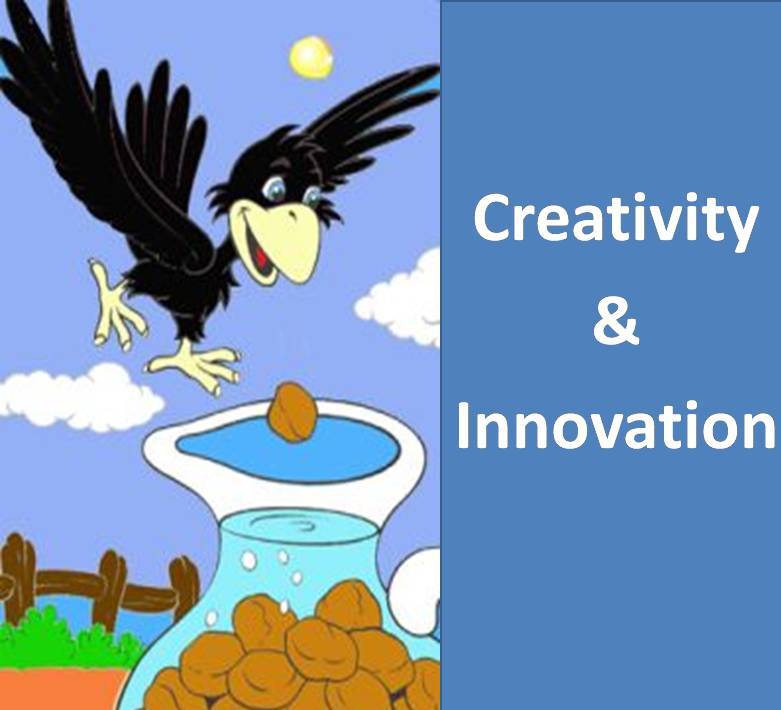
Let me take you back to the age old story of ‘Thirsty Crow’. Once there was a crow. He was very thirsty. He went here and there in search of water. At last he saw a water pot. He looked inside the pot. There was very little water inside the pot. The crow saw some stones nearby. He thought of a plan. He picked some stones and started putting stones inside the pot one by one. The water level came up. He drank the water and flew away happily. This story was amongst the first few I was told during my childhood. The then moral of the story was ‘‘Where there is will, there is a way’’ but life is all about exploring and evolving constantly. Going with that we human beings are the certainly the most accommodating and we instantly look for solutions. I have been observing people, reasons vary – the pressure of circumstances, peer pressure, family expectations and what not. Everybody loves short-cuts and ‘Jugaad’ for that reason is picking up fast. It is no more a way of life…it is smart strategy. The solution and results matter at last – for my driver, the maid, the friends, the colleagues and almost everyone around. If someone bangs the idea of ethical ways – people just disregard the philosophy and feel that you are not aware of how the world works. How to get the job done is no more a concern, to get the job done is what matters. To share an experience – few days back I had gone to meet my Uncle at Aligarh and on the way back my car broke down. I was around 25 kms from the city. I called my cousin to help and in half an hour’s time he came to the rescue with a mechanic. He checked my car and told me that it needs to be taken to workshop. I told him I can’t spare that much of time as it was already 3 pm and I had an urgent meeting the very next day. He said in Hindi, “To iska koi jugaad ker deta hoon” (“He will do something”- Read it as temporary arrangement) so that I can reach Gurgaon. He connected some wires to the battery and asked me to test if the car is fine. I checked and my car was working perfectly. I thanked him and started my journey to Gurgaon and in around 4 hours I was there at my home in Gurgaon. Next day I went to a nearby service station and got my car repaired. Defining Jugaad ‘Jugaad’ is a word which is used very frequently in day to day life. As per Wikipedia, Jugaad means an innovative fix or a simple work-around, sometimes pejoratively used for solutions that bend rules, or a resource that can be used as such, or a person who can solve a vexatious issue. Both concepts express a need to do what needs to be done, without regard to what is conventionally supposed to be possible. Indovation, Chinovation, Hack, Kludge are some of the words which are used as synonyms to Jugaad. All the concepts express need to do what needs to be done without taking the same old beaten path. And The Thirsty Crow was the first to travel ‘the Jugaad way’ and now I know the current moral of the story is to use possible means, creativity and innovation whichever can help human kind to live a solution driven life.