Management Lessons from Ali Baba & Forty Thieves

Ali Baba and 40 Thieves is amongst most told stories from the Arabian world and I am sure most of you must have listened to this amazing story.  I came across this amazing story recently while preparing for my upcoming program and immediately some thoughts crossed my mind. In this post I’ll share the Management Lessons from Ali Baba & Forty Thieves. Here is the story of Ali Baba & Forty Thieves* Ali Baba and his elder brother Qasim are the sons of a merchant. After their father’s death, the greedy Qasim marries a wealthy woman and becomes well-to-do, building on their father’s business. Ali Baba marries a poor woman and settles into the trade of a woodcutter. One day, Ali Baba is at work collecting and cutting firewood in the forest, and he happens to overhear a group of 40 thieves visiting their treasure store. The treasure is in a cave, the mouth of which is sealed by magic. It opens on the words “open sesame” and seals itself on the words “close sesame”. When the thieves are gone, Ali Baba enters the cave himself and discreetly takes a single bag of gold coins home. Ali Baba and his wife borrow his sister-in-law’s scales to weigh their new wealth. Unbeknownst to them, Qasim’s wife puts a blob of wax in the scales to find out what Ali Baba is using them for, as she is curious to know what kind of grain her impoverished brother-in-law needs to measure. To her shock, she finds a gold coin sticking to the scales and tells her husband. Under pressure from his brother, Ali Baba is forced to reveal the secret of the cave. Qasim goes to the cave, taking a donkey with him to take as much treasure as possible. He enters the cave with the magic words. But in his greed and excitement over the treasure, he forgets the words to get out again. The thieves find him there and kill him. When his brother does not come back, Ali Baba goes to the cave to look for him, and finds the body quartered and with each piece displayed just inside the cave’s entrance, as a warning to anyone else who might try to enter. Ali Baba brings the body home where he entrusts Morgiana, a clever slave-girl from Qasim’s household, with the task of making others believe that Qasim has died a natural death. First, Morgiana purchases medicines from an apothecary, telling him that Qasim is gravely ill. Then, she finds an old tailor known as Baba Mustafa whom she pays, blindfolds, and leads to Qasim’s house. There, overnight, the tailor stitches the pieces of Qasim’s body back together so that no one will be suspicious. Ali Baba and his family are able to give Qasim a proper burial without anyone’s asking awkward questions. The thieves, finding the body gone, realize that yet another person must know their secret, and they set out to track him down. One of the thieves goes down to the town and comes across Baba Mustafa, who mentions that he has just sewn a dead man’s body back together. Realizing the dead man must have been the thieves’ victim, the thief asks Baba Mustafa to lead the way to the house where the deed was performed. The tailor is blindfolded again, and in this state he is able to retrace his steps and find the house. The thief marks the door with a symbol so the other thieves can come back that night and kill everyone in the house. However, the thief has been seen by Morgiana who, loyal to her master, foils the thief’s plan by marking all the houses in the neighborhood similarly. When the 40 thieves return that night, they cannot identify the correct house, and their leader kills the unsuccessful thief in a furious rage. The next day, another thief revisits Baba Mustafa and tries again. Only this time, a chunk is chipped out of the stone step at Ali Baba’s front door. Again, Morgiana foils the plan by making similar chips in all the other doorsteps, and the second thief is killed for his failure as well. At last, the leader of the thieves goes and looks himself. This time, he memorizes every detail he can of the exterior of Ali Baba’s house. The leader of the federation pretends to be an oil merchant in need of Ali Baba’s hospitality, bringing with him mules loaded with 38 oil jars, one filled with oil, the other 37 hiding the other remaining thieves. Once Ali Baba is asleep, the thieves plan to kill him. Again, Morgiana discovers and foils the plan, killing the 37 thieves in their oil jars by pouring boiling oil on them. When their leader comes to rouse his men, he discovers they are all dead and escapes. The next morning, Morgiana tells Ali Baba about the thieves in the jars. They bury them, and Ali Baba shows his gratitude by giving Morgiana her freedom. To exact revenge after some time, the leader of the thieves establishes himself as a merchant, befriends Ali Baba’s son (who is now in charge of the late Qasim’s business), and is invited to dinner at Ali Baba’s house. However, the thief is recognized by Morgiana, who performs a sword dance with a dagger for the diners and plunges it into the thief’s heart, when he is off his guard. Ali Baba is at first angry with Morgiana, but when he finds out the thief wanted to kill him, he is extremely grateful and rewards Morgiana by marrying her to his son. Ali Baba is then left as the only one knowing the secret of the treasure in the cave and how to access it. This is how this story ends for everyone happily for everyone except forty thieves. The forty thieves were rich and powerful but still they not only lost all their fortunes but also their lives. Ali Baba was neither more powerful nor smart still he managed to get everything by making best use of… Continue reading Management Lessons from Ali Baba & Forty Thieves

Tips For An Awesome Co-Facilitation (Last post of the series)

In my last post on ‘The Art of Co-Facilitation’ I talked about Co-Facilitation, its types, advantages and potential disadvantages. A co-facilitation program is very different than conducting a solo program as a lot of planning and co-ordination needs to be done with the partner facilitator. Following are some quick tips for an awesome Co-Facilitation: Before the Program Plan and Document: This is the first step before every program. Write down the plan on a piece of paper or a word document. Make sure your plan includes the agenda, session plan, time allocation and key deliverables by each of the facilitators. With this the co-facilitators can further plan their individual sessions, who’ll take lead on which part of the program, and who will be responsible for logistics. Share Expectations: Before you go for the program you need to share your expectations with your co-facilitator as he may have a different understanding of the co-facilitation and any disconnect between co-facilitators lead to conflict and ruining the program. Leveraging Strengths: Co-facilitators may have different styles and capabilities. You must discuss your strengths and weaknesses and plan how you can leverage on each other’s strengths to run the program successfully. Practice: Practice gives real time feedback on the flow and various other aspects of running a co-facilitated program. It helps in testing assumptions and fixing the time for various interventions. Doing this actually helps you to intervene if your co-facilitator deviates from the plan. Inspect the venue: Have a look at the venue and check the sitting arrangement, various logistics, sitting arrangement for the co-facilitator. During the Program Support your co-facilitator: While your co-facilitator is conducting an activity you need to pay attention as he may need some props or your help to keep scores etc. or you may write on the white board while your partner is having some discussion with the participants or you may help your co-facilitator in distributing handouts/books etc. Neither interfere nor contradict: Very basic but very important. Neither interfere while your co-facilitator is conducting some activity nor contradict him (unless it’s critical for learning). I strongly recommend when one facilitator is conducting his part of the program the co-facilitator should be out of the sight of the participants as if both of the facilitators will be there the participants may find it difficult to focus on the one who’ll be running the program. The other co-facilitator should be on the stage only if there’s some activity or he’s assisting the lead facilitator of that part of the program. Stay on time: Remember you can finish the program in designated time only if both the facilitators stay on time. If one facilitator takes more time than what is allocated, it may impact the other facilitator activity and overall program. Team Work: Co-facilitation is all about team work and you can’t be successful if your co-facilitator fails. Support each other and help each other to play your roles well. The best learning and memory you can give is of a great team work. After the Program Share feedback: It’s very important to ask and share feedback. You may ask your co-facilitator what went well? What didn’t work as planned? What is the biggest learning? How differently would you run the program during next co-facilitation? Note down the responses and refer to these when you co-facilitate another training program. Take care of the logistics: Check out the status of the logistics. There may be times when you have a lot of unused training material and you may have to courier it back. Also the attendance and other training records needs to be e-mailed and there could be follow-ups with the clients. Co-facilitators can divide and finish the tasks. Hope these two posts will help you conduct an awesome co-facilitation program. Feel free to share your experience/feedback.


How to Develop the Habit of Book Reading?

Let me begin with the fact that I have been a reader in the past and then I was just busy like all of us and then I renewed by friendship with books again. On a serious note, I am aware how habit of book reading adds perspective and meaning to our lives but I also have an experience to share, which I am sure will help you in developing habit of book reading for all great reasons like self development, career growth, career switch and even the young parents can read and seek help for positive parenting and develop habit of book reading in the kids. During my MBA I had read 114 books, apart from my subject books! Those included self-help, business management and non fictional. I met with an accident on 4th April’03 and I was in coma for some time. I spent more than a year recovering from the accident. A lot of things changed due to accident and I missed two which were very close to me. First, driving, and the other, book reading. I recovered gradually and started my life as a normal person and started my career with Indian Express and also started driving. I was happy as my life was back on track and I was doing well in my career. But still I missed reading and my favorite seat at my B- School library. Though I was reading a lot on my mobile, laptop etc. but I was not reading books the way I was used to. I asked two of my friends, Mohit Pawar and Jimmy Jain, who themselves are voracious readers, to help me get back to the reading habit and they helped me with some simple but very effective tips which I found are of great help if anyone wants to develop this habit. I am back to the rhythm and my own small library is flourishing again. This blog is for my friends who want to develop book reading habit. Quick tips to develop habit of book reading: 1. Always carry a book: As they say out of sight is out of mind. Always carry a book and whenever you get time try and read during the day. You can read while traveling or waiting for someone in a restaurant or a cab, a train station – wherever you have free time. A lot many people listen to audio books while driving but I don’t recommend that as when you are driving you should focus on driving and listening audio book needs concentration and then you will not be able to concentrate on driving. 2. Make a reading list: Keep your hobbies/ interests in mind while deciding what kind of books you enjoy reading and make a list of the books. And if you come to know about a good book you can add the book to your list. I keep my reading list on my email and I email myself if someone recommends me a good book which is not there in my reading list. 3. Go to a used bookstore: In the beginning one may find books he wants to read to be expensive. The used bookstore can be of great help as it will help you save a lot of money and you will be able to buy more books and read more. 4. Minimize TV Time and Social Media Time: TV and Social Media consume a lot of our productive time and as per some medical reports they have a bad effect on our brain and health. Reducing our TV and Social Media time will be little challenging at first but once you make concentrated efforts you will be amazed how much free time you have for book reading. 5. Go to library: You can find those expensive and rare books, which are not there in used bookstore, in library. The memberships are quite affordable and helpful for the starters. 6. Set a Goal: To start with set a goal of reading at least 25 pages or two chapters of a book in a day and once you have finished a book now set another goal on how many books you will read in a year. 7. Have a reading time: Assign a time for book reading in your daily schedule and unless you will not schedule it you will not find time in your busy schedule. Assign even if you have 15 minutes in entire day and stick to it no matter what happens. 8. Buy Books don’t Borrow: I prefer to buy book and not to borrow as I can re read it after some time and I do it quite often. Though there are some expensive and rare books which are difficult to purchase. For all such books use library and make notes after reading which can be helpful for future references. 9. Know when to give up: To start with find books which are fun and compelling and keep you going. If you are reading a book and you find the first 50 pages as boring then give up. The idea here is to cultivate a habit. Once you have cultivated reading habit you can always pick up the same book and read. 10. Reward yourself: Make your reading time pleasurable. Have some tea/coffee when you read. And treat yourself with pizza/chocolate/ice cream after finishing the book. I hope this helps you and if you are trying and still find it difficult to develop habit of book reading, let us connect and I might help you with some recommendations and preferences. You can write to me on [email protected] Happy reading 🙂

Govardhan Puja: Thanks Giving Day to our Parents- Lessons from our Puranas

Today’s the fourth day of Diwali festival and Hindus across the world celebrate this day by performing Govardhan Puja. Govardhan Puja reminds me of stories I had learned during my childhood. In this post I’ll share those two stories and lessons from our Puranas. Story 1: Krishna was playing with his friends when he saw villagers of Varindavan carrying eatables for a Yaga to please Indra, the God of Rains. Krishna asked them why do they pray a God who’s so distant and instead they should pray Mount Govardhan which actually brings rains and provide food and shelter to so many creatures. He initiated a festival that paid respect to Mount Govardhan by offering food and many other things. Krishna then assumed the form of mountain and accepted the offerings of the villagers. Indra got very angry upon seeing shift in the devotion of villagers towards Krishna and Mount Govardhan. To teach villagers a lesson he directed lightning storm and heavy downpour upon Varindavan. To protect the villagers from the calamity, Krishna lifted the Mount Govardhan on his little finger and the entire village came under Mount Govardhan to take shelter from storm. Indra after causing such heavy downpour for seven days ultimately gave up and bowed to Krishna’s superiority. Click here to watch the story. Story 2: Once Maharishi Narad gave a divine fruit to Lord Shiv and Mata Parvati and told them that whosoever will eat this fruit will get supreme knowledge and immortality. Kartikey and Ganesha, sons of Lord Shiv and Mata Parvati, both wanted to eat that fruit and both requested their parents to give the fruit to them. Now the situation was tricky as whom to give the fruit. So Lord Shiv told them whoever will circle the entire world seven times and come back first will get the fruit. Listening this Kartikey took his vehicle, Peacock, and started his journey around the world. On the other hand Ganesha’s vehicle was mouse and he thought he can’t defeat his elder brother by riding mouse. So he thought what does the world mean to him and who’s his world. Ganesha loved his parents and whoever we love, becomes center of our lives and all our life energy goes into it. So Ganesha circled his parents, who were his world, seven times and got the blessings of his parents. Ganesha was adjudged the winner of the race. Hence he was given the divine fruit. Click here to watch the story. These two stories, and lessons from our Puranas, remind us that our parents are our Mount Govardhan and our world. All their lives they try and protect us from all the evils and difficulties. They provide nothing but the best of means to grow and help us excel in our lives. When the whole world is performing Govardhan Puja today by circling Mount Govardhan, let’s all Thank our Parents for all the sacrifices they have made and all they have done to ensure our well being and make us what we are today. May God Bless everyone’s Parents!

Developing Ownership

Business Ownership is a looked upon personality trait for leaders, team builders and those who are managing people. Taking ownership about things is a human trait. But taking ownership of situations, circumstances and people doesn’t comes easy. A number of business managers complaint about the lack of ownership among the team members. Developing ownership amongst employees is the challenge a number of leaders come across. I was finishing up a TNA – Training Need Analysis at a Company in BFSI industry and somewhere during the process – felt that all a company lacks these days is the – Employees with ownership & belongingness as a trait. This post is been due since three weeks and the idea was to share and ponder with you my readers – on what companies can do to develop ownership among it employees? Following are few tips I could streamline, please feel free to share your take and ideas on the same: 1. Delegate Smartly: Usually employees don’t take decisions or take ownership as they are afraid of taking a decision which will not be supported by the management. This problem can be solved by delegating effectively. You need to clearly communicate the responsibility of decision making as well as responsibility of the results. When you assign any responsibility to someone you also need to give him freedom to make necessary (at least routine) decisions required to executive the assignment. For any strategic decisions regarding the project you need to take your employees in confidence. Delegation requires a lot of will, time and energy to communicate your expectations but once done properly it helps developing ownership. 2. Have a Plan: Align your team with the vision of the company and help them understand where do they fit in the picture. Once people have understanding of the key objectives, the ownership comes in automatically. As a leader you also need to ensure your team is engaged properly with the broader goals and if you help them succeed and grow, you may be surprised to see what they achieve. 3. Let Employees Speak Out: Employees feel more empowered when they are allowed to speak and contribute ideas and solutions to the problems. Their voice will define the value they bring to the organization. 4. Allow for Mistakes: As a project manager one may have to make a number of decisions in a day and there are many project managers who keep on delaying decisions as they are afraid of taking a wrong decision which may hamper their growth in the company. Allowing people to make mistakes plays a very important part in building a sense of ownership. Mistakes help people learn new lessons and broaden their horizon. 5. Create United Sense of Purpose: When you collaborate on goals and decisions with your employees and connect them to the bigger picture, they develop a united sense of purpose and they tend to be more participative and look beyond their role. The united sense of purpose that employee ownership delivers helps attract and retain the best talent. 6. Build in Daily Reminders of Your Mission: For the first time when I visited Shoppers Stop to conduct a training program, I encountered an amazing but incredibly simple way of reminding all its employees of its mission. At 10:45 am all the Shoppers Stop employees across all the stores PAN India, including their corporate office staff at Mumbai, will stand up and everyone will sing their anthem. Shoppers Stop anthem has a wonderful lyrics and reminds their company mission to their employees. I found it as a very powerful daily reminder of the company mission. Due to such inbuilt daily reminder no doubts Shoppers Stop is amongst most admired retail brands in India. 7. Reward Employees: Who Go Beyond the Norms: Nothing can quell desire to give extra than not feeling recognized. Rewarding employees who go beyond the norms helps in developing ownership amongst employees. I remember a store manager of a retail store in Mumbai opening the store very late in the night to help a customer. The customer was to get engaged the next morning but had lost her luggage in the flight. Though opening a retail store in the absence of the security staff posed a big risk but to help his customer the store manager went beyond the norms. And he was recognized for going beyond the norms and helping the customer by his company. Nothing motivates an employee more than recognizing his contribution to the company goals.   These are the 7 tips which I could think of as a practice for developing ownership among the employees. I am sure these are helpful not only for big corporates but also for SMEs, which mostly work on resource restrictions. The above pointers are also some of the reasons why some of the startups have excelled quickly.

The Little Things Which Make Me Happy

Have you ever wondered what those little things which make you happy are? Following is list of those little things which make me happy Waking Up Early Without Alarm: You know you have more time to finish things. Cuddling In The Bed: It feels great to cuddle in the bed waiting for the bed tea. Going for a Walk: You enjoy the beauty of the nature. Watching the sun rise and watching the birds going out of their nests fills you with joy. Deep Breathing: A 5-10 minutes of deep breathing fills you with positive energy. Touching the Feet of Parents: It’s a way of thank your parents for raising you well. Their blessings can make miracles happen. Smile by a Stranger: Smile breaks the barriers and you may get a friend for life. Give one and you may one. Playing with Kids: Reminds us of those golden days when we were kids. Aaloo Prantha with White Butter and Lassi: Nothing can be more delicious than Aaloo Prantha with white butter and a glass of lassi. Mouth watering and keeps you going for the day. Listening Stories From Elders: Elders love to tell their stories and these stories are full with their life experiences and can help you understand life easily. A Tight Hug From Your Little Ones: That’s what I call, “Unconditional Love.” To See Kids Smiling While Sleeping: What else could be happiness than watching kids smiling while they are sleeping? A Small Change in Your Routine: Makes you more exciting and try something new. Less Traffic on Roads: Heavenly feeling if you are a Delhite. And if you get all signal lights green then.. (No words can describe that feeling) Reaching Office Early: That head start which counts at the last. Storytelling To Kids: Ensures you are spending time with your kids and pass on the knowledge you received from your parents. Reading Your Favorite Book: Helps you understand so many things. Meeting Old Friends On The Go: Who else can remind of all those mischief and blunders? Finding Money in Old Jeans: May be that’s what we call magic! Food Cooked By Mother: Divine! Hugging Your Parents: Telling them whatever you are today and wherever you have reached, it’s only because of their hard work. To Listen Parents Childhood Stories From Their Friends: It’ll make you rolling over the floor laughing. And tell you how naughty/humorous they were at their young age. Spending Time With Old Buddies: Connect to your past. Spending Time Following Your Passion: For me it’s bird photography and playing Alghoza. It helps overcome anxiety and there are a number of lessons I have learnt from bird watching. Click here to learn lessons from bird watching. A Joke From Little Ones: Helps forget the tensions and enjoy life. Visiting Your School/College: Gives a chance to return whatever you have learned to the future generations. Watching Full Moon: That wow feeling!! Experimenting While Cooking and Letting Your Wife Know About The New Recipe: An off from kitchen keeps wife happy. Season’s First Rain: That cool breeze and smell of freshness. Langar Sewa In A Gurudwara: Heavenly feeling! A Break From Your Routine: Gives you an opportunity to rejuvenate yourself. Music You Love: Takes you to the other world, away from your sorrows. And if you can sing along that’s the icing on the cake. Going On a Long Drive: Helps exploring new areas. Dew Drops On Petals Of A Flower: Makes you enjoy the beauty of Mother Nature. Watching/ Listening The Birds Chirping/ Singing: It could be mesmerizing. Massage: Relives from exertion. An Extended Weekend: One can’t ask for more these days than an extended weekend. It gives you enough time to finish all your pending work and go to some distant place away from noise and pollution and rejuvenate yourself with new energy. Your Status Message/ Tweet Getting Viral: Something everyone wants these days. Hand Written Letter: A rare feat these days as people prefer emails and other short messaging services. . Extending A Helping Hand: Sometimes your little help occupy the biggest part of their hearts. Let Your Spouse Pursue his/her Dreams: Makes the bond stronger and makes you proud of his/her achievements. These are some of the little things I could figure out which make me happy. There could be many other things which can be added to the list. Make your list of little things which make you happy.

Life Lessons from Dr. APJ Abdul Kalam

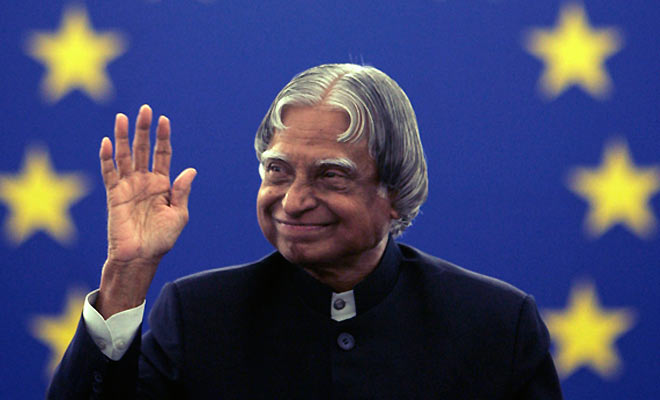
It was around 7:40 pm when my wife told me about demise of Dr. APJ Abdul Kalam. I thought she must have seen the picture circulating on various social media wherein Jharkahnd Education Minister paid floral tribute to Dr. Kalam thinking he’s no more and I ignored the news. I was having dinner when I switched on to TimesNow news channels and was shocked to know whatever my wife had told was true and Dr. Kalam was no more. It was very sad news as Dr. APJ Abdul Kalam was such a big role model and inspiration for millions of people for his simplicity, humbleness and dedication towards our nation and its people. There are following life lessons we can learn from Dr. Kalam: Give Back to the Society: If you have achieved something in your lives, give something back to the society as not everyone is as blessed as you are. You need not to have a lot of money to be able to give donations to the NGOs. You can give back to the society by raising your kids well, by volunteer to help children, by providing food and shlter to someone in need and by suing your skills and teaching other. Children provide us the best opportunity to give back to the society. Learn to Manage Failure: Dr. Dhawan was the chairman of ISRO and Dr. Kalam was the project Director for Rohini Satellite Launch in August 1979. The satellite was launched but the launch rocket fell in the Bay of Bengal after few seconds of its launch and it was a major setback to Indian Space Program. The press conference was supposed to be attended by Dr. Kalam but Prof. Dhawan took the responsibility of the failure and gave assurance to the media personnel that the mission will be completed next year. Next year, in 1980, after launching the satellite successfully into the orbit, Prof. Dhawan asked Dr. Kalam to face the media and conduct the press conference. When failure occurs a leader owns the failure and when success comes a leader gives it his team. A leader should learn how to manage failure and should take full responsibility of the failure. Have a Vision/ Dream: He once said, “Dreams are not what you see in sleep, dream is the thing which does not let you sleep”. The single most important factor to drive the human civilization ahead is our Dream. If you have a dream, nurture it with hard work and whatever circumstances never let your dreams die. People with dream move far ahead than people with none. In one of his speeches at India Parliament he recited his poem, “The Vision”: I climbed and climbed Where’s the peak, my Lord? I ploughed and ploughed Where is the knowledge treasure, my Lord? I sailed and sailed Where is the island of the peace, my Lord? Almighty bless my nation With vision and sweat resulting into happiness. Humility & Modesty: Though Dr. Kalam was awarded the highest civil award of India, the Bharat Ratna, he never liked being called Bharat Ratna Dr. APJ Abdul Kalam. He even sent circular across DRDO, India’s premier research agency, to not to refer him Bharat Ratna. For a leader the ambition should be greatness of work and people rather than the leader himself. A leader should always be humble and down to earth and should keep a low profile. Follow Your Passion: Whatever you do in your lives do with passion and the success will follow. Passion is powerful feeling of enthusiasm inside us. If you are enthusiastic and passionate about your work you will overcome many obstacles and move up in your lives. Your passion helps you to improve and get better in your lives. Don’t be victim of your situations. Find something you love to do so much you can’t wait for sun to rise to do it all again. RIP Dr. APJ Abdul Kalam.

How to Wake Up Early?

I am an early riser and a number of friends ask me how to wake up early? In this post I’ll share the benefits of waking up early and some  very simple nut powerful way which will help you in waking up early in the morning. There’s one common trait found in all successful people world over- they all are early risers and they start their day when most of others are still sleeping in their beds. Waking up early is amongst the most important lessons I learnt from my parents (Click here to read). We are living in an era where people love to watch TV and surf internet till late and these days there are not many early risers. I am not saying people who are not early risers are not successful but there are a number of benefits on early risers can avail. Following are the benefits for early risers: Exercise: Mornings are the best time to exercise in fresh air. A brisk morning walk of 45-50 minutes is considered one of the best exercises for human beings. Regular exercise improves fitness, provides energy for the whole day, boosts mood and helps with deep sleep cycles. Explore Nature’s Beauty: Watching rising sun and birds flying in large numbers is amongst the best feasts of the nature. There’s nothing more beautiful than the loveliness of the woods before sunrise. Breakfast: A number of daily commuters on Delhi roads can be seen having their breakfasts in their cars as they don’t get time for most important work of the day i.e. to have breakfast. And if their mothers/wives/cooks too wake up late they leave for office without having breakfast after fasting for whole night. People who wake up early get ample time to have a healthy breakfast which will supply sufficient energy to work whole day Develop a Positive Mental Attitude: Osho once said, “Morning is the best time to meditate. After the whole night’s rest you are very close to the center of your being. It is easier to move into the center consciously early in the morning than at any other time — because for the whole night you have been there at the center, you have just left it. Deep sleep rejuvenates because, although unconsciously, you enter into the core of your being — but you still enter. All the tiredness of the outside world is taken away, and all the wounds are healed, and all the dust disappears. You have taken a bath; you have dived deep into your own being. So in the morning when you have just awakened and you are very close to the center… Soon the periphery will take you, will possess you; you will have to go into the world of occupations. Before you go into that external journey, have a look, so that consciously you can see who you are. This is what meditation is all about. Hence, down the ages, the morning, early morning, when the earth is awakening and the trees are awakening and the birds are awakening and the sun is awakening, when the whole atmosphere is full of awakening, you can use this situation. You can ride on this tide of awakening and you can enter into your own being, awake, alert, aware. And your whole life will be transformed. And your whole day will be transformed because then you will have a different orientation. Then you can go into the marketplace and still you will remain in contact with your inner core.” Waking up early helps you develop a positive mental attitude as you can prepare for the challenges ahead in the day. Take Advantage of Extra Time: If you wake up just one hour earlier each morning you would gain 15 days in a year and that extra one hour can make all the difference to your lives. You will commute in less congested roads and reach their offices on or before time if you start your day early. One of my colleagues, Mr. Sachit Jain at Bharti AXA, was used to reach office before time so that he can finish important work without being interrupted by anyone and leave on time in the evening. Better Family Life: You can finish your work on time by starting early and you can leave office on time and you can spend quality time with your family without worrying about any pending work. Various studies has described that early risers are more optimistic and have better family lives than night owls. It’s not very difficult to become an early riser. It’s just a matter of taking action with discipline and motivation. Following are some quick tips which can help you develop a habit to get up early in the morning and plan your day in a better way: Put Your Alarm Away From Your Bed: Don’t keep alarm near your bed as you will either shut it up or put it on snooze. If the alarm is far from your bed you will have to leave your bed to shut it. You are up now and all you need to do is stay up. Don’t Fall in 5 Minute Trap: Once you are up better jump out of the bed and go out of your bedroom. Don’t fall in 5 minute more trap as once people start snoozing usually they keep on snoozing again and again. Remember you lose when you snooze. It’s very easy to wake up at first attempt. If 6-8 hours of sleep is not sufficient then 5 more minutes are not sufficient either. People who fall in 5 minute trap usually end up waking up guilty for not waking up at the first attempt. Start With Decremental Timing: Don’t be rigid about waking up early. If u want to start waking up at 5am from your daily routine of 7am, don’t start waking up at 5am next day onwards. It should be decremental say by 15 minutes every 4th day. Your… Continue reading How to Wake Up Early?

Are you Listening?

Are you Listening? A lot is been said, discussed, trained, argued on listening skills. Be it a debate on television, a healthy discussion with friends, a critical board room meeting or anything – listening holds importance everywhere. If you are listening, you are alert and you are into the game. If you aren’t – you are surely missing something! While thinking about this phenomena, this practice, this significant trait, I was thinking about the 3 princes who left a great message for all of us about Active Listening. Once there was a king who had three sons. As the king was aging, he decided that he should handover his throne to his sons. He consulted to his wisest ministers and reached a conclusion that as he doesn’t have a big empire so he can’t divide his empire in three parts and give it to his sons. So he decided that he will hold competition which will assess the Princes on various parameters like intelligence, diplomacy, strategy etc. After some more consultations with his ministers he announced the competition and invited all his countrymen to witness the occasion. The competition began. The princes were given very difficult tasks to perform and they finished those tasks very efficiently. Then there was a competition to check their knowledge on topics like diplomacy, war, strategy, economics, politics etc. They all answered the most difficult questions with ease and at the end of the competition their scores tied. This was a big problem for the king as he was at the crossroads again. He announced to extend the competition for one more day and returned to his palace. He called his ministers again and discussed the days’ outcome. One of his ministers suggested something and the king agreed to him. Next day the competition begun and everyone was expecting something very tough to happen. The King gestured and there came three statues made up of Gold, Silver & Bronze. Then he asked all three prince to examine and pick the best statue. First came the Eldest, he examined the three statues and came back to his seat. Then came the middle one, he examined the statues and returned to his seat. Lastly it was turn of the youngest prince. He examined the statues carefully and after spending some time he too returned to his seat and sat. Now king called the eldest prince and asked his opinion. The eldest prince answered that the Gold statue is the best as it’s made of gold which the most precious metal and signifies prosperity. Hence the statue made up of Gold is the best. Unsatisfied with the answer of the eldest prince, the king called the younger one and asked his opinion, he answered that the Silver Statue is the best as nature of silver is cold so it would help control anger and a Kings greatest asset is to control his emotions and take a rational decision. So statue made up of silver is the best. King liked the answer but was not fully satisfied and called the youngest prince for his judgment. The youngest prince answered the bronze statue is the best statue. The King asked the reason behind adjudging the bronze statue as the best. To explain his choice, the prince asked a servant to bring a long bamboo stick. The servant brought the bamboo stick and gave it to him. Then the prince picked the Gold statue and put the bamboo stick in its ear. To everyone’s surprise the bamboo came out of the other ear. Then he picked the silver statue and inserted the bamboo stick in its ear and it came out of the mouth. After that he inserted the stick in the other ear and it came out of the mouth again. now he picked the third statue and inserted the stick in the ear of the same. Everyone was expecting that the stick will come out through other ear or mouth. But it didn’t. The Prince inserted the remaining stick in the ear but there was no sign of the stick. He placed it at its position. And picked the gold statue and then explained, Gold is the most precious metal but still the statue made up of gold didn’t make the best statue as this statue represent people who comes at a great cost to the nation but doesn’t listen to their king. If there king will say anything to them they will listen from one ear and throw it out from the other ear. Such people are of no use and should be removed from their positions. Then he picked the silver statue and explained, there are people whom you’ll consider as closest to you. If you ever share your secrets with them they will listen with both the ears and will go out and spread your secrets everywhere they go. Such people are enemies of the country hence should be dealt very strictly. Then he picked the last statue and explained why he adjudged it as the best. One should be like bronze statue and should listen to everything not only with his ears but also with his eyes and heart. Whatever is being said to him, he should be able to absorb it and utilize it for everyone. The king was so happy with the answer that he announced him the winner of the competition and handed over the throne to him. This is an old story which tells us the importance of active listening. But like most of my listeners, you must be wondering – why this story for listening? How is this relevant – isn’t this about the decision making and analysis. When I got further into the understanding, I realized ‘No’ there is a message for listening skills. Imagine the similar situations in the work atmosphere, link the statue traits to the people we work with, we meet in everyday life. There are people who listen and ignore because they are firm… Continue reading Are you Listening?